
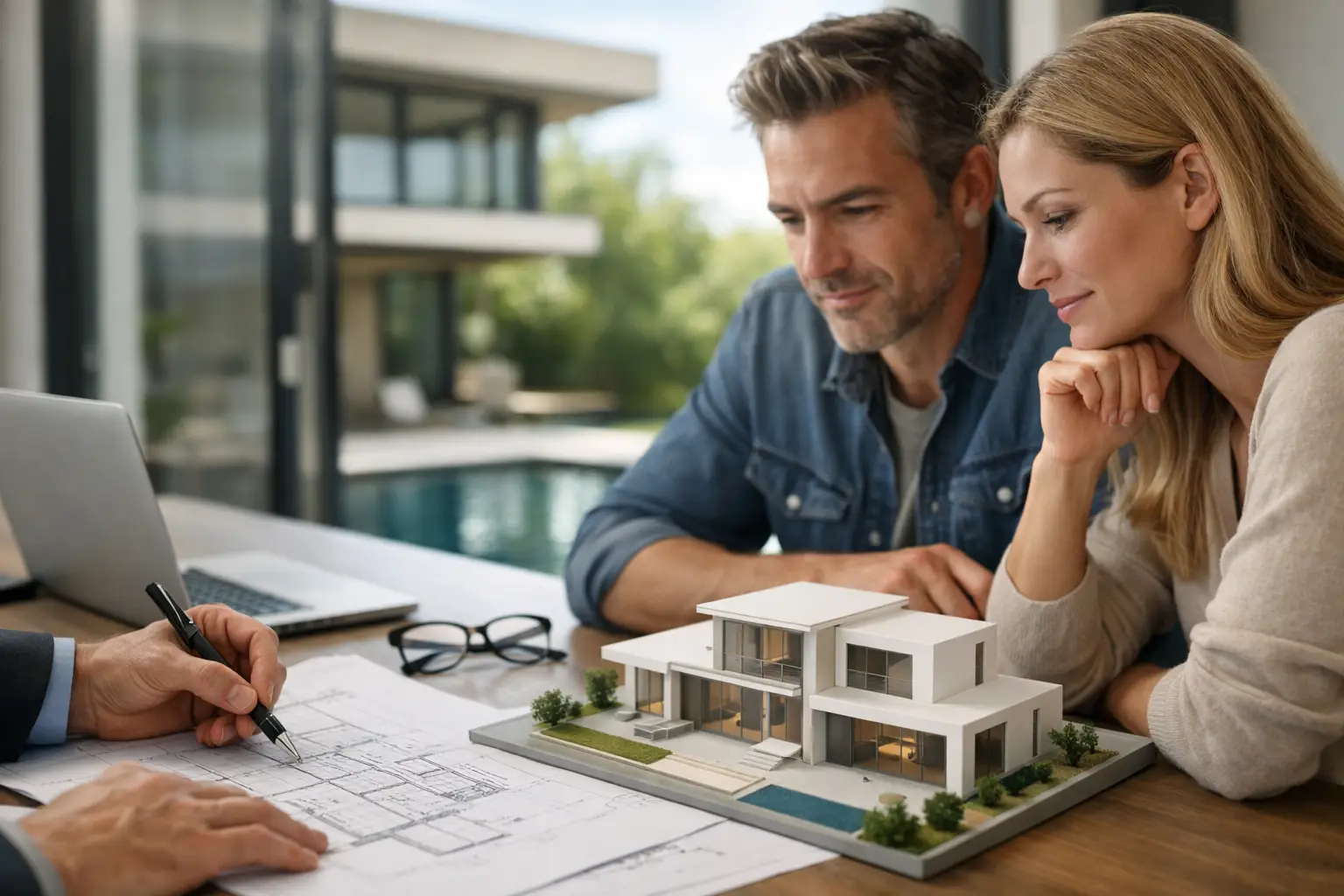
A well-drawn set of plans can still become a disappointing home if the builder cannot execute the detail. That is the gap many owners discover too late when they engage an architectural home builder based on price alone. Architectural homes ask more of a builder – tighter tolerances, better coordination, more site discipline, and a clear understanding of how design decisions affect structure, waterproofing, services and long-term performance.
If you are building a custom home, knockdown rebuild or architect-led extension in Melbourne or regional Victoria, the builder matters as much as the design. In many cases, more. The right team protects the architect’s intent while making sure the home actually works on site, on budget and over time.
What an architectural home builder actually does
An architectural home is not simply a standard house with higher-end finishes. It usually involves bespoke detailing, non-standard materials, more complex structural elements, and a stronger relationship between form, light, orientation and liveability. That means the builder’s role extends well beyond basic construction.
A capable architectural home builder reads drawings critically, identifies buildability issues early, and works through them before they become expensive variations or site delays. They understand that a recessed window, a cantilever, a curved wall or a clean junction between materials may look simple on paper but can require substantial planning behind the scenes. This is where experience shows.
The strongest builders also know where design ambition needs practical support. Sometimes an idea can be delivered exactly as drawn. Sometimes it needs refinement to meet engineering, budget or compliance requirements without losing the essence of the design. That balance is part of the job.
Why architectural projects fail when the wrong builder is involved
Most building problems are not dramatic at first. They start in small gaps between trades, unclear documentation, rushed sequencing or poor supervision. On an architectural project, those gaps are magnified because the design often relies on precision.
A builder who mainly delivers volume-style homes may not have the systems or trade network to handle this level of complexity. They may price the job with incomplete assumptions, overlook difficult junctions, or fail to account for the real labour involved in bespoke work. The result is usually one of three outcomes: corners get cut, the budget blows out, or the finish falls short of what was promised.
More importantly, some of the biggest failures are hidden. Poor flashing, weak bracing, inadequate waterproofing, incorrect set-out and badly coordinated penetrations can compromise a home long after handover. These are not cosmetic defects. They are build integrity issues.
How to assess an architectural home builder properly
The first thing to look for is not polished marketing. It is evidence of disciplined construction. Ask how the builder manages structural inspections, waterproofing checks, engineering sign-offs and compliance at each stage. Ask who is supervising the build day to day. Ask how they deal with incomplete documentation before contract, not after demolition has started.
You should also pay close attention to how they talk about pricing. Architectural homes are rarely cheap to build, but they should still be priced clearly. A fixed-price contract is valuable when it is based on proper documentation, realistic allowances and honest assumptions. If a quote looks light compared with others, there is usually a reason.
An experienced builder will be upfront about what is known, what still needs resolving, and where selections or site conditions may influence cost. That is not hesitation. That is competence.
Documentation matters more than most clients realise
A good builder can only price and plan accurately when the drawings, engineering and specifications are sufficiently developed. If these documents are vague, the risk of variations rises quickly.
That does not mean every decision must be made at day one. It does mean the builder should help identify what needs to be locked in before contract and what can be managed later without creating budget or programme issues. This early discipline saves a lot of pain.
Site management is where quality is won or lost
Architectural builds are coordination-heavy. Trades cannot work in silos. Framing affects cladding. Cladding affects waterproofing. Waterproofing affects internal finishes. Services need to be planned around structure and detailing, not jammed in afterwards.
A proper site manager keeps sequencing tight, checks work before it is covered up, and makes sure one trade does not compromise another. This is especially important on custom builds where many details are unique to the project.
The architect-builder relationship matters
A strong architect and a strong builder should improve the project together. When that relationship works, design intent is protected and practical construction knowledge is brought in at the right time.
That does not mean the builder should simply say yes to everything. A disciplined builder will challenge details that are likely to fail, cost more than they should, or create maintenance problems later. The point is not to dilute the design. It is to build it properly.
For clients, this collaboration often reduces stress. Rather than acting as the go-between on every technical issue, you have a team working through solutions with a shared focus on outcome, not ego.
Architectural home builder or design and construct?
This depends on how your project is set up.
If you already have an architect and approved drawings, you may be looking for a builder who can take those documents into construction with precision and discipline. In that case, proven experience with architect-led homes is essential.
If your project is still at concept stage, a design-and-construct pathway can be more efficient. It brings design, budgeting and buildability into the same conversation from the start. This can help avoid a common problem where clients invest heavily in plans only to find the build cost is well beyond expectations.
Neither model is automatically better. Architect-led projects can produce excellent outcomes when the builder is engaged early and documentation is resolved properly. Design-and-construct can offer greater cost control and smoother delivery when managed by an experienced team. The right choice depends on your brief, timeline, appetite for involvement and the complexity of the site.
What quality looks like beyond finishes
Many homeowners judge quality by what they can see at handover – joinery, tiles, lighting, paint. Those matter, but they are not the whole story.
The quality that protects a home over ten or twenty years is often hidden in the wall wrap, drainage, slab preparation, tie-downs, membranes, flashings and framing accuracy. This is where a serious architectural home builder separates itself from a builder chasing presentation over performance.
On premium residential projects, the unseen work must be as disciplined as the visible finish. If it is not, expensive materials on the surface will not compensate for underlying defects.
That is why documented stage inspections, licensed and insured trades, engineering compliance and proper handover procedures are not optional extras. They are part of building responsibly.
Questions worth asking before you sign
When speaking with builders, ask direct questions and listen for direct answers. How are variations controlled? What is included in the fixed price and what is excluded? Who handles permits and consultant coordination? How often will you receive progress updates? What happens if site conditions change? What warranties and post-handover support are provided?
You are not looking for a sales pitch. You are looking for a process. Good builders are usually comfortable explaining exactly how they work because they have done it many times before.
It is also worth asking for examples of complexity, not just beauty. A builder who can explain how they resolved a difficult structural detail or managed a challenging site is often more reliable than one who only shows polished photography.
Why the cheapest price is rarely the cheapest outcome
Architectural projects punish underpricing. If a builder has not allowed enough for labour, supervision or technical detail, something gives way later. It may appear as constant variations, rushed workmanship, prolonged timelines or disputes over scope.
A realistic price, backed by proper documentation and experienced project management, is usually the safer commercial decision. You may pay more upfront, but you are buying predictability, accountability and a better chance of getting the home you actually approved.
For many clients across Victoria, that is the real value of working with a builder who understands custom residential construction at a high level – not just how to pour the slab and frame the walls, but how to manage the full build with care.
Builda Group approaches these projects with that mindset. The focus is not on impressing clients with vague promises. It is on disciplined planning, fixed-price clarity where documentation allows, rigorous trade coordination, and build quality that holds up in the parts of the home most people never see.
A good architectural home should feel resolved, not just stylish. The best way to get there is to choose a builder who respects the design, understands the technical demands behind it, and is prepared to do the hard parts properly from day one.