
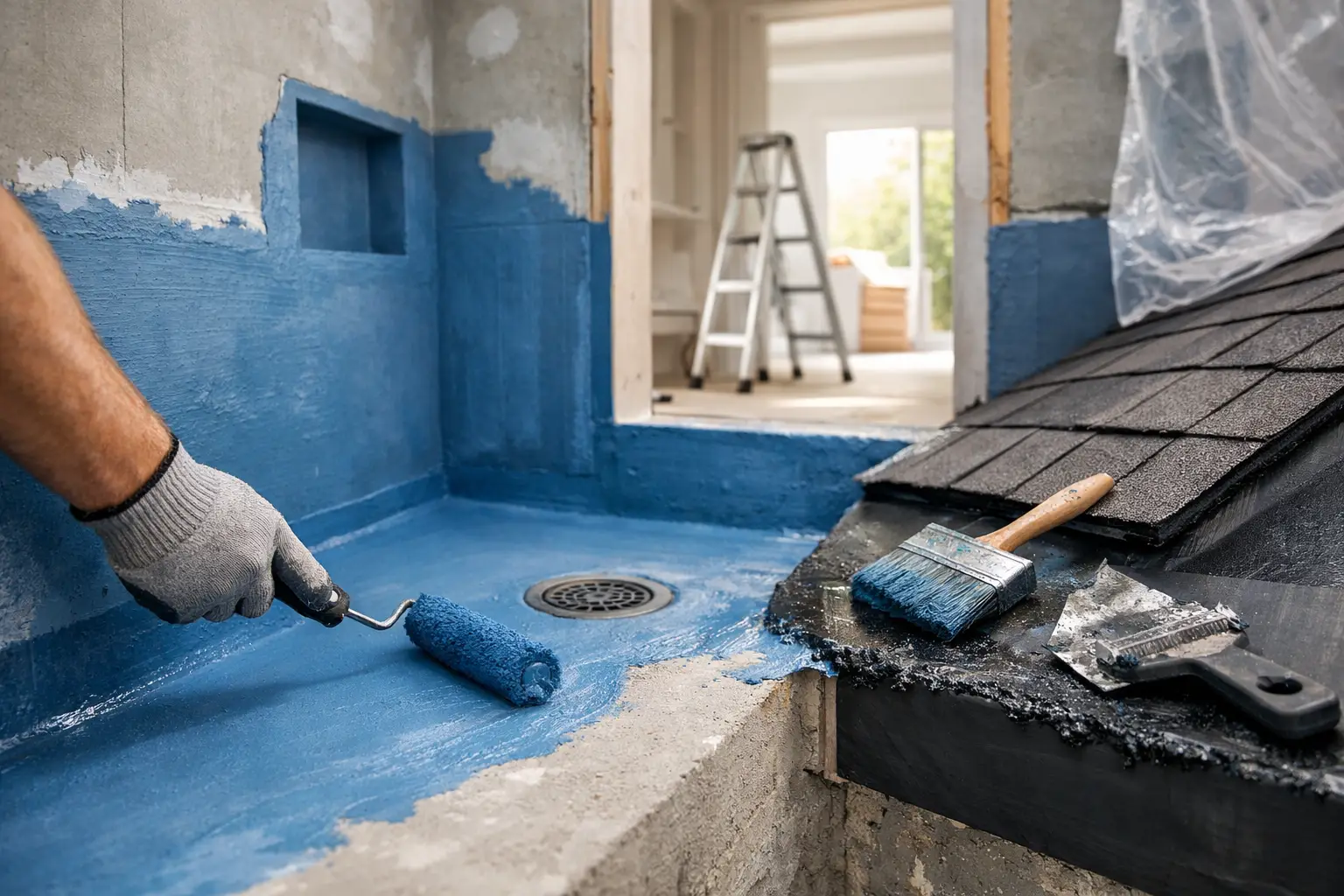
A bathroom can look immaculate at handover and still be hiding the sort of mistake that costs thousands a few years later. That is why waterproofing in new homes is not a finishing detail. It is a critical part of the build envelope, and if it is handled poorly, the damage rarely stays contained to one room.
For homeowners building in Melbourne and across Victoria, this matters more than most realise. Wet areas, balconies, thresholds, roof penetrations and external junctions all rely on proper waterproofing to keep water where it belongs. Tiles, grout and paint are not the waterproofing system. They are only the visible layer. What protects the home is the membrane, the preparation underneath it, and the discipline of the trades installing everything around it.
Why waterproofing in new homes matters so much
When waterproofing fails, the signs are often delayed. Moisture gets into wall cavities, under screeds, behind joinery or into timber framing before anyone sees staining or swelling. By then, the repair is rarely simple. You are not replacing a cosmetic finish. You may be opening walls, removing tiles, redoing shower bases, replacing skirtings or addressing mould and substrate damage.
In a new home, that is particularly frustrating because these issues are avoidable. Waterproofing is one of those areas where the quality of the unseen work determines how the house performs over time. A well-built home is not judged only by straight shadow lines and premium tapware. It is judged by whether the details behind the finishes were done correctly the first time.
There is also a compliance side to it. In Australia, waterproofing in wet areas must meet the relevant standards and the requirements of the National Construction Code. That means the work is not optional, and it is not a space for shortcuts. The standard matters, but so does how seriously the builder manages sequencing, inspections and trade accountability on site.
Where waterproofing usually matters most
Most people think first about bathrooms, and rightly so. Showers, bathroom floors, bath surrounds and laundries are high-risk areas because they deal with daily moisture and regular cleaning. If the substrate is not prepared properly, if the membrane is not applied to the correct thickness, or if junctions and penetrations are handled carelessly, water will eventually find a way through.
But wet areas are only part of the picture. Balconies are another common failure point, especially where falls are inadequate or door thresholds are poorly detailed. Water pooling near an entry door is not a minor annoyance. It is often the beginning of damage to flooring, framing or internal finishes.
External areas also need close attention. Roof penetrations, box gutters, parapets, retaining interfaces and window or door flashings all form part of the broader moisture management strategy of a home. Strictly speaking, not every one of these details is a membrane waterproofing task, but from the homeowner’s point of view the distinction does not matter. If water gets in, the home has a waterproofing problem.
What proper waterproofing looks like on a well-run build
Good waterproofing starts before any membrane is opened. The substrate needs to be sound, clean and suitable for the product being used. Falls to wastes and drainage points need to be set correctly. Junctions need bond breakers where required. Penetrations need to be positioned and detailed so the membrane can be applied continuously and without weak spots.
Then comes product selection. Different areas call for different systems. Internal wet areas, external balconies and below-ground applications do not all use the same approach. The right system depends on movement, exposure, substrate type and finish requirements. This is where experienced builders and licensed trades make a difference. They understand that a membrane is not just a product choice. It is part of a complete detailing package.
Application is equally important. Membranes need correct coverage, curing times and reinforcement at change-of-plane junctions and around penetrations. Rushed trades can compromise the whole system by applying too thinly, tiling too early or damaging the membrane during follow-on works. That is why disciplined site supervision matters. One good trade can still be undone by the next one if the sequencing is poor.
In practice, proper waterproofing also means documentation and checks. On a premium residential build, this should not be treated as a quick sign-off item. It should be inspected as a critical stage, with defects picked up before finishes hide the work.
The biggest waterproofing mistakes in new homes
The most common issue is not always the membrane itself. It is often poor coordination. The plumber sets penetrations in awkward positions, the screeder creates poor falls, the waterproofer works around an unprepared surface, and the tiler is pushed to keep the job moving. Each trade may complete its own task, but the outcome as a system is compromised.
Another common problem is relying on appearance instead of process. A bathroom can look expensive and still fail early if the waterproofing underneath was rushed. Homeowners often assume premium finishes mean premium construction. They do not. Waterproofing quality comes from method, supervision and trade discipline, not from what is visible at practical completion.
There is also a false economy in cutting costs here. Saving a small amount on labour, supervision or product selection can create major rectification costs later. Once the home is complete, access becomes destructive and expensive. That is why experienced builders treat waterproofing as a structural durability issue, not a line item to squeeze.
What homeowners should ask their builder
If you are planning a custom home, knockdown rebuild or major renovation, it is worth asking direct questions. Who carries out the waterproofing work? Are they licensed and insured? What products are being specified for internal wet areas and external applications? How is the work inspected before tiling or covering up? What documentation is retained?
You should also ask how the builder manages the sequence of trades around waterproofing. This is where many defects begin. A careful builder will have a clear process for substrate preparation, membrane installation, curing, inspections and protection before the next trade comes in.
The answer you want is not sales language. It is evidence of a system. A builder who knows this space will speak clearly about standards, detailing, staging and accountability. They will not wave it away as routine.
Why the builder’s mindset matters
Waterproofing is one of the clearest indicators of how a builder approaches the whole job. If they are disciplined in the hidden details, that usually carries through to framing, flashing, bracing and finishing. If they are casual about the parts you cannot see, that should raise concerns.
For that reason, the right builder is not just someone who can deliver a beautiful home on paper. They need to be the sort of builder who respects the technical work that protects the home long after handover. At Builda Group, that attention to unseen build quality is part of how projects are managed from the start, because durability is built through method, not guesswork.
Waterproofing in new homes is not an area to leave to chance
By the time water damage becomes visible, the real problem has usually been there for a while. That is what makes waterproofing so unforgiving. You only get one easy opportunity to do it properly, and that is during construction.
If you are investing in a new home, look past the finishes and ask how the home is being protected in the places you will never see again once the walls are lined and the tiles are laid. A well-built home should give you confidence not only on handover day, but years later when the bathrooms, balconies and external junctions are still performing exactly as they should.