
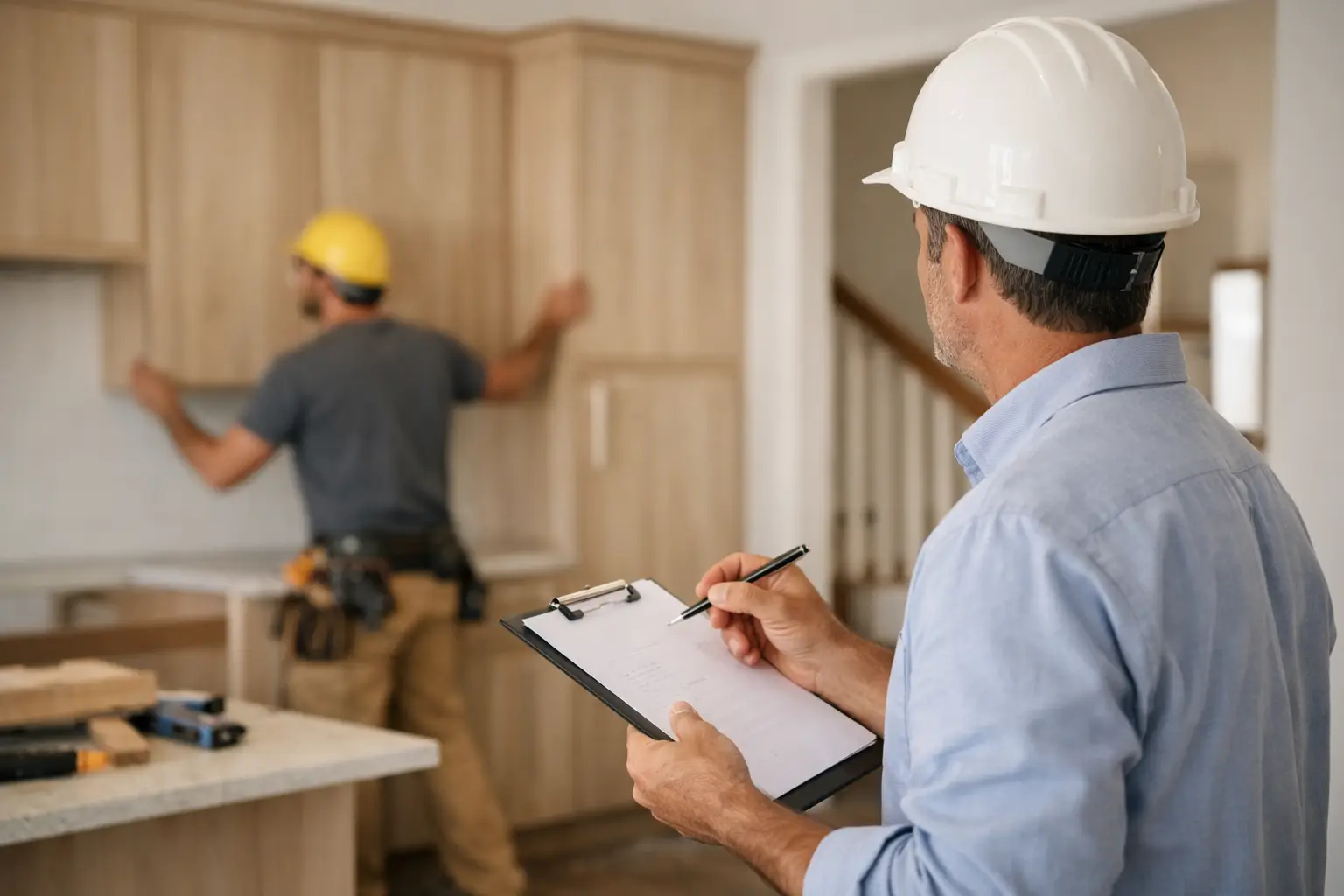
A freshly painted wall can hide a great deal. So can a polished kitchen, staged photography and a confident sales meeting. Knowing how to evaluate builder workmanship means looking beyond the finishes you can see on handover day and asking how the home has been built behind them.
For a custom home, major renovation or knockdown rebuild, workmanship is not a cosmetic extra. It affects weatherproofing, structural performance, maintenance costs and how confidently you can live in the home for decades. The right builder will welcome informed questions because quality work stands up to inspection.
Start with the work you cannot see
Most serious building failures begin in concealed areas: poorly installed waterproofing, missing or inadequate flashing, incorrectly detailed drainage, compromised framing or rushed penetrations through external walls. By the time plaster, tiles and cabinetry are installed, those details are no longer visible.
Ask a prospective builder how they manage quality at each construction stage. A credible answer should be specific. They should be able to explain who checks the frame before it is covered, how wet areas are prepared and tested, when waterproofing is inspected, and how they confirm roof and wall flashings are properly installed.
In Victoria, work must comply with the National Construction Code, relevant Australian Standards, approved plans and permit requirements. Compliance is the baseline, not the whole measure of craftsmanship. Good builders build with enough care that critical details are documented, checked and corrected before the next trade covers them up.
Ask whether stage-by-stage inspections are recorded and whether photographs are taken of key concealed works. These records are useful evidence of process, particularly on complex renovations where existing conditions can change once demolition begins.
Inspect completed projects with a trained eye
A display home or newly completed project can show whether a builder has an eye for finish, but it cannot tell you everything. Where possible, inspect more than one project, including a home that has been occupied for a few years. Time exposes problems that a handover clean can conceal.
When you walk through a completed home, slow down. Look along walls in natural light rather than straight at them. Check that shadow lines, cornices, skirtings, tile edges and joinery reveals are consistent. Open doors and drawers. Run taps. Look beneath vanities and inside cupboards. Examine external junctions where cladding, brickwork, windows, paving and drainage meet.
You are not looking for a home with no tolerances at all. Construction materials move, and hand-built work is not manufactured in a factory. You are looking for care, consistency and sensible detailing. Minor paint touch-ups before handover are normal. Repeated cracks, uneven gaps, poorly aligned finishes, ponding water or makeshift sealant repairs deserve closer questioning.
Look at transitions, not just feature finishes
Expensive stone and tapware can distract from workmanship. The more revealing areas are often the transitions: where a window meets cladding, where tile meets a shower screen, where a deck meets the house, or where a new extension joins an existing dwelling.
These junctions demand planning across several trades. A builder who gets them right is usually coordinating the job properly. A builder who relies on excessive silicone, cover trims or last-minute patching may be dealing with problems after the fact.
External work matters just as much. Check fall and drainage around the house, clearances between soil and cladding, roof lines, gutters, downpipes and the finish around penetrations. Water management is rarely glamorous, but it is one of the clearest indicators of long-term build integrity.
Assess the builder’s site discipline
Workmanship is shaped by how a site is run. A well-managed site does not need to look sterile every hour of every day, but it should look controlled. Materials should be protected from weather, rubbish should be managed, access should be safe, and work areas should not be cluttered with avoidable damage risks.
During a site visit, notice whether timber is stored off wet ground, whether finished surfaces are protected, and whether trades appear to have clear areas in which to work. Poor storage can damage materials before installation. Poor sequencing can force trades to work around each other, leading to rushed fixes and compromised finishes.
Ask who will supervise the project day to day. Some builders sell the job personally but hand it over with little continuity. For homeowners, the practical question is simple: when an issue appears on site, who sees it, who has authority to resolve it, and how quickly is it addressed?
A strong project manager or site supervisor coordinates trades, checks details against plans, keeps the programme moving and raises issues early. This is especially important in architect-led homes and major renovations, where design intent often depends on precise set-outs and carefully resolved details.
How to evaluate builder workmanship through documents
The contract and pre-construction documents reveal whether quality is being managed deliberately or left to assumption. Before signing, review the drawings, specifications, engineering, inclusions and any schedules that describe materials and finishes. Vague allowances and broad descriptions can create disputes later, even when both parties started with good intentions.
Look for clear answers to these practical questions:
- What products, finishes and installation systems are included?
- Which inspections occur at slab, frame, waterproofing and completion stages?
- How are defects identified, recorded and rectified before handover?
- Who manages variations if an existing-condition issue or client change arises?
- What warranties, insurance and structural guarantees apply to the work?
A fixed-price contract can provide valuable certainty, but only when the scope is properly developed. It does not remove the need for a clear process when unforeseen conditions arise, particularly in renovations. The builder should explain exclusions, provisional sums and variation procedures plainly rather than treating them as fine print.
Also confirm that the builder and relevant trades are appropriately licensed and insured for the work being undertaken. For substantial Victorian residential projects, you should understand the domestic building contract, permit pathway and insurance arrangements before construction starts. A professional builder will not make this feel like an awkward request.
Speak to past clients about the process, not only the result
References are most useful when you ask about behaviour under pressure. Nearly every builder can provide a client who loves their finished kitchen. The more useful questions concern communication, problem-solving and accountability.
Ask whether the builder kept the client informed, whether costs were explained before changes proceeded, how defects were handled, and whether the programme was managed realistically. Ask what happened when something did not go to plan. On any substantial build, there will be decisions, delays or site discoveries. The measure of professionalism is how those moments are handled.
If possible, speak with clients whose projects differ from yours. A builder may perform well on a straightforward new home but lack experience coordinating a constrained inner-Melbourne renovation, a sloping site or a dual occupancy build. Relevant experience matters because workmanship relies on anticipating the risks specific to the project.
Use independent checks without making them adversarial
An independent building inspector can be a sensible safeguard, particularly for a high-value project. They can provide a separate view at key stages and help you interpret technical issues. Their involvement should complement the builder’s own quality controls, not replace them.
The best builders do not object to reasonable independent inspection. They may discuss timing and site safety requirements, but they should be prepared to address legitimate findings with evidence and a rectification plan. What matters is not whether every report has an observation – most do – but whether issues are taken seriously and closed out properly.
At Builda Group, documented stage inspections and trade accountability are part of the construction discipline, because the work hidden behind linings and finishes is where a home earns its durability.
Choose evidence over reassurance
Builder workmanship is easier to judge when you stop looking for a perfect sales pitch and start looking for proof: completed homes that have aged well, clean site practices, detailed documentation, qualified trades, inspection records and direct answers to difficult questions.
The builder you choose will make thousands of small decisions on your behalf. Choose one whose standards are visible not only in the finished photograph, but in the details they are prepared to show you before the walls are closed.