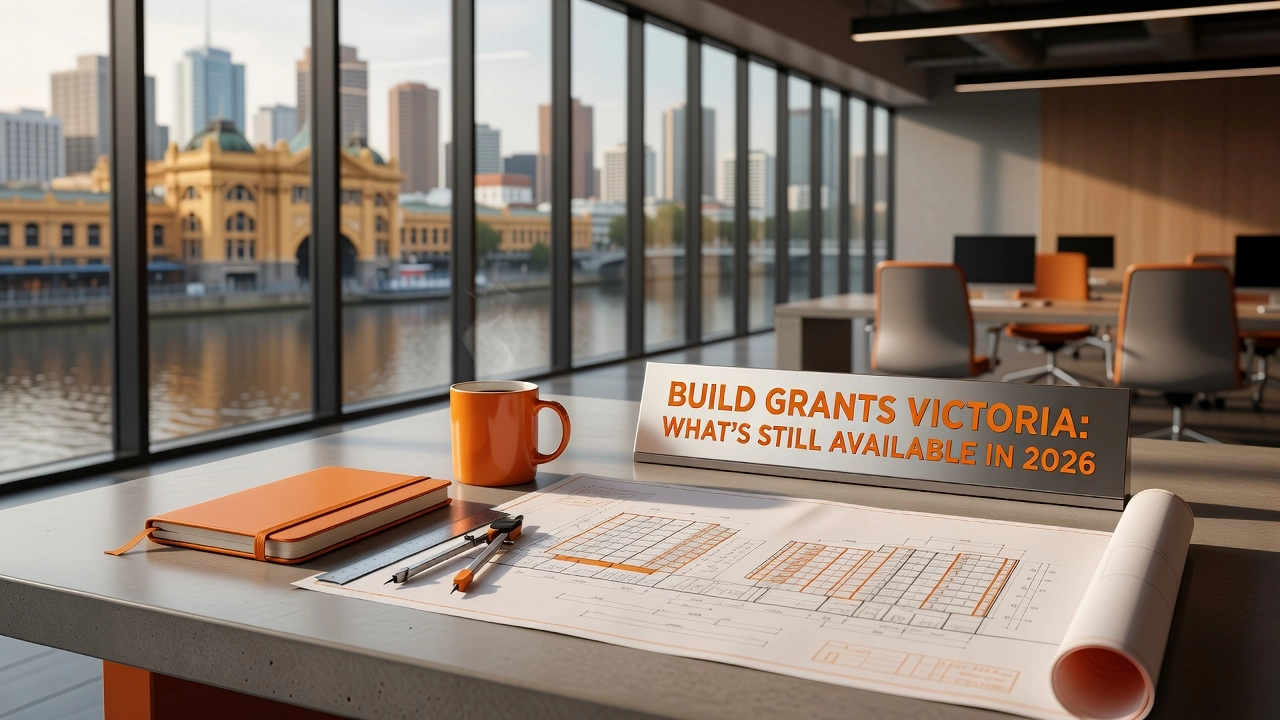
Building a new home in Victoria is one of the biggest financial decisions you will ever make, and knowing how to reduce those upfront costs can make a real difference. The good news is that government support is still on the table in 2026, and a well-chosen build grant could save you thousands of dollars before you even break ground.
But with multiple programs, changing eligibility rules, and deadlines that shift without much warning, it can be genuinely hard to know where to start. Many first-time builders miss out simply because they did not know what was available or applied too late.
This guide cuts through the confusion. We have put together a clear, up-to-date list of the build grants and financial incentives still available to Victorian residents in 2026. Whether you are a first home buyer, a low-to-moderate income earner, or someone building in a regional area, there is likely something here for you. Read on to find out exactly what you can apply for, who qualifies, and how to get the process moving in the right direction.
HomeBuilder Is Gone — Here’s Why It Still Comes Up
If you’ve searched for a “build grant” in 2025 or 2026 and ended up confused, you’re not alone. The federal HomeBuilder grant — a $25,000 stimulus payment introduced in June 2020 — is now officially closed and sits under closed taxes, levies and grants on the Victorian State Revenue Office website. It is not paused, not under review, and not coming back. The final deadline to even submit supporting documentation passed in June 2025, which means the window has closed entirely.
The program was never designed as permanent housing policy. It was a direct COVID-19 economic response, introduced when Australia’s economy contracted sharply and the federal government warned that tens of thousands of new homes simply would not get built without intervention. At its peak, Victoria led the nation in applications, and the program is credited with an estimated $50 billion economic contribution nationally, according to research on the HomeBuilder program’s fiscal impact. That scale explains why it left such a lasting impression.
One structural flaw worth knowing: apartments and townhouses were excluded from HomeBuilder’s eligibility criteria from the outset. If you were pursuing a unit development or multi-dwelling project during that period, the grant was never available to you. That exclusion is a useful reminder to read the fine print on any grant program carefully before building your plans around it.
The long administrative tail of HomeBuilder, with paperwork running until mid-2025, has kept it in public conversation well past its use-by date. According to Treasury’s official HomeBuilder page, the program is now fully archived. What’s actually available to you today is a different question entirely, and that’s where this guide focuses next.
The First Home Owner Grant (FHOG): Still Active for New Builds
If you’re searching “build grant” in 2026, the Victorian First Home Owner Grant is the most directly relevant active program you’ll find. Unlike the now-closed HomeBuilder stimulus covered above, the FHOG is a long-standing, consistent part of Victorian housing policy, making it a genuine planning tool rather than a scramble to meet a deadline.
What the FHOG Covers
The FHOG is a one-off payment available to eligible first home buyers building or purchasing a newly built home in Victoria. The grant applies to new builds specifically — not renovations of existing dwellings. A renovation may qualify only if it meets the State Revenue Office’s definition of “substantially renovated,” which is a narrow and specific threshold. If you’re planning a standard extension or upgrade to an existing home, this grant won’t apply. Before building, confirm the current grant amount and property value cap directly with the State Revenue Office Victoria, as these figures are subject to legislative change.
Who Qualifies
Eligibility covers two areas: the applicant and the property. On the applicant side, you must be a first home buyer, at least 18 years old, and an Australian citizen or permanent resident. As of 26 November 2025, New Zealand citizens are also eligible regardless of visa type. You must intend to live in the property as your principal place of residence for a continuous 12-month period, beginning within 12 months of settlement or construction completion. The grant is available to individuals only, not companies or trusts.
Timing Matters for Custom Builds
The FHOG is administered through the State Revenue Office Victoria and, for construction loans, is typically released at the first drawdown, not at contract signing. This is a critical cash flow detail that catches many first home buyers off guard. Your $10,000 arrives when construction begins, not when you sign. Factor this into your budget from day one.
Why Your Builder Choice Affects Your Application
The FHOG requires a registered building contract as part of your application. A contract that is incomplete, poorly structured, or prepared by an unlicensed operator can complicate or delay your grant application before a single brick is laid. Working with a builder who holds a Domestic Builder Unlimited licence means your contract meets the standard required. You can verify any builder’s licence registration through the Victorian Building Authority before signing anything.
The FHOG has been part of Victorian first home buyer policy for years. That consistency is exactly what makes it worth building your budget around.
NDIS and Specialist Disability Accommodation (SDA) Funding
SDA funding is one of the most misunderstood funding streams in the disability housing space, and it surfaces regularly in “build grant” searches for good reason. NDIS participants who have been approved for Specialist Disability Accommodation can use that funding toward purpose-built accessible housing, making it functionally similar to a construction grant for eligible participants. But it operates nothing like the FHOG or the old HomeBuilder program, and treating it as a straightforward grant is where many families and coordinators go wrong early in the process.
SDA is administered by the National Disability Insurance Agency (NDIA), a federal body, not a state government program. Before construction can begin, the NDIA must approve both the participant’s eligibility and the proposed dwelling design. Eligibility is not broad; research suggests only around 6% of total NDIS participants are likely to qualify, based on assessments of extreme functional impairment or very high support needs. The SDA design standards also set out four distinct housing categories, including Robust, Improved Liveability, Fully Accessible, and High Physical Support, each carrying specific construction requirements. Pricing arrangements are reviewed annually, so confirming current parameters directly with the NDIA before making any build decisions is essential.
It is also important to understand that SDA applies specifically to purpose-built new dwellings or major modifications meeting certified design standards. Participants who need accessibility modifications to an existing home may be eligible under separate NDIS funding categories entirely. The distinction between SDA and other NDIS supports is frequently blurred, and getting clarity on which funding line applies to your situation is the critical first step.
Builda Group has direct, hands-on experience delivering NDIS accessibility modifications across Melbourne. Holding a Domestic Builder Unlimited licence, we understand both the construction requirements and the documentation expectations that come with NDIS-funded work. Most builders can handle a ramp or a bathroom modification; fewer understand how to navigate the compliance side of an NDIS project properly.
If you are an NDIS participant, a support coordinator, or a family member working through build options, start by confirming whether your NDIS plan includes SDA or modification funding. Then engage a builder who knows the compliance requirements, not just the tools.
Victoria’s Big Housing Build: What It Means for Builders and Investors
Victoria’s Big Housing Build is a $5.3 billion government program described as the largest single investment in social and affordable housing in Australian history. Its ambition is significant: more than 12,000 new homes across Victoria, comprising approximately 9,300 social housing dwellings and 2,900 affordable properties. The Social Housing Growth Fund sits at the centre of this, with $1.38 billion allocated specifically through this mechanism to deliver homes via community housing organisations.
Who actually receives the funding matters here. This is not a grant individuals or private investors can apply for directly. Funding flows to registered community housing organisations (CHOs), which then procure construction through tender processes, subcontracting arrangements, and delivery partnerships. For licensed builders, that distinction is important to understand because it tells you where the opportunity actually sits: not at the grant application stage, but in the construction pipeline those organisations generate.
The numbers behind that pipeline are substantial. The Rapid Grants Round alone exceeded $1 billion in total value, funded more than 2,351 homes across 80-plus projects, and is projected to create up to 9,500 jobs for Victorians. The role of local government in the Big Housing Build adds another layer, with 21 local government areas earmarked for priority development, shaping where construction activity is concentrated.
For investors and developers considering unit development or multi-dwelling projects, this landscape signals where government capital is flowing and what project types are attracting sustained funding support. It does not mean direct grants are available to you; it means the market conditions favour certain project types.
Builders holding a Domestic Builder Unlimited licence are better placed to engage with this work than volume builders operating from fixed catalogues. Social housing projects are site-specific, compliance-heavy, and require adaptive problem-solving. That is precisely where a licensed custom builder’s credentials carry real weight. As the Victorian Social Housing Accelerator Program implementation plan confirms, Victoria received $496.5 million in federal co-investment on top of existing commitments, reinforcing that this pipeline is not slowing down.
HIA Victoria was direct in its assessment of the 2024 Victorian Budget: it had little to offer individual home builders. The Big Housing Build’s benefits are structural and industry-wide. For owner-builders and individual investors, the FHOG and NDIS funding streams covered earlier in this guide remain the more relevant pathways.
What Replaced HomeBuilder at the Federal Level?
The short answer is that nothing has replaced HomeBuilder at the federal level, at least not in any form that looks familiar to owner-occupier builders. Australian Treasury confirms the program is closed and will not reopen. Applications closed on 14 April 2021, and even the administrative tail for submitting supporting documentation ended in mid-2025. If you were hoping a successor program had quietly launched, that hope needs to be reset before it shapes your project budget.
What has shifted is the direction of federal housing policy itself. Rather than direct cash grants to individual builders and homeowners, the federal government in 2026 is focused on shared equity schemes and supply-side interventions. Help to Buy, a shared equity program that allows eligible buyers to co-purchase with the government, reduces upfront deposit requirements but does not subsidise construction costs the way HomeBuilder did. The Housing Australia Future Fund targets social and affordable housing supply, not private owner-occupier builds. These are fundamentally different tools, designed to solve a different problem.
This shift puts real weight on state-level programs. For Melbourne clients, the Victorian First Home Owner Grant and available stamp duty concessions become the primary financial levers available when planning a new build. As covered earlier in this guide, those programs have their own eligibility rules, property value thresholds, and application processes that are completely separate from anything at the federal level.
For first home buyers, stacking the FHOG with a federal shared equity scheme may still reduce upfront costs meaningfully. But “stacking” requires understanding each mechanism independently before assuming they work together without friction.
This is exactly why the funding conversation needs to happen before a building contract is signed, not after. A licensed builder with a Domestic Builder Unlimited licence and experience across new builds, renovations, and NDIS modifications can help you map what is actually available for your specific situation, rather than what used to exist.
Using a Build Grant with a Custom Builder vs. a Volume Builder
Volume builders have done a thorough job connecting grants to their sales process. The FHOG gets you interested, and then the conversation moves quickly toward a catalogue of standard floor plans, fixed facades, and inclusion lists. For buyers who want a straightforward process and a proven package, that can work. But it does not work for everyone, and it is worth understanding exactly what you are agreeing to before the grant becomes the reason you sign.
A licensed custom builder holding a Domestic Builder Unlimited licence operates differently. A registered building contract prepared under this licence can meet FHOG eligibility requirements without constraining the design to a display home template. Your site conditions, block dimensions, orientation, and brief all shape the outcome. The licence category matters here because it permits the full scope of domestic building work, not a narrowed range of project types attached to a fixed-price system.
For NDIS clients, the difference is more significant. Accessibility modifications and SDA-related builds carry specific documentation, compliance, and reporting requirements. A builder adapting a volume package to meet those needs is working against the grain of their own system. A builder with genuine NDIS project experience already understands the process, the participants involved, and what the funding requires at each stage.
The grant is a financial input. What you actually get at the end is a building, and the quality of that building depends on who manages the construction, how they communicate, what their licence covers, and whether they have delivered your type of project before.
Builda Group brings over 10 years of hands-on residential building experience across Melbourne and surrounds, covering new homes, renovations, extensions, unit developments, NDIS modifications, and insurance repair works. The project types that attract grant funding map directly to what the team builds every day.
Which Grants Apply to Which Project Types?
Not every project type connects to the same funding stream, and getting this wrong early can derail your planning before a sod has been turned. Here is how the current grant landscape maps to the most common residential build types.
New custom home builds are where the Victorian First Home Owner Grant remains the most relevant active option. If you are a first home buyer building a new home on your own land or purchasing through a house-and-land package, the FHOG is the primary grant to pursue. Current eligibility details, including the grant value and the property value cap, should be confirmed directly with SRO Victoria before you budget around any figure, as these thresholds are subject to change.
Renovations and extensions sit in a narrower position. The FHOG does not apply to renovations of existing homes; it is a new build program. The federal HomeBuilder grant previously covered substantial renovations meeting a minimum spend threshold, but that program is now closed. As of the time of writing, no equivalent active grant specifically covers private residential renovation or extension projects. If this changes, SRO Victoria and the federal Treasury website are the primary sources to check.
Unit developments and townhouses require careful verification. Historically, investor-driven unit developments were excluded from HomeBuilder eligibility. FHOG access for newly built units depends on whether the dwelling qualifies as a new build and meets applicable value thresholds. Developers and investors should engage directly with SRO Victoria before structuring any project around grant assumptions.
NDIS accessibility modifications operate entirely outside the FHOG framework. Funding here flows through an approved NDIS plan, under the appropriate capital supports or home modifications funding category. Engaging a builder with direct experience in NDIS-compliant construction is not optional; it is how the funding is properly activated and the work delivered to the required standard.
Knowing your grant stream before you engage a builder means the contract can be structured correctly from the outset, avoiding delays, cost surprises, and eligibility issues that surface too late to resolve cleanly.
What to Do Before You Build
Before you take any next step, get clear on which funding stream actually applies to your situation. The FHOG is for first home buyers building new homes. NDIS/SDA funding is for eligible participants with approved plans requiring purpose-built or modified housing. Big Housing Build partnerships operate through community housing organisations and open different pathways for licensed builders. These are separate programs with separate rules, and conflating them early creates problems that are difficult to unwind later.
Once you know which stream applies, verify the current figures directly with the primary source. For FHOG, that is SRO Victoria. For NDIS and SDA, that is the NDIA. Grant values, property price caps, and eligibility criteria change, and the SDA Design Standard is under active revision in 2026. Any builder or website giving you confident dollar figures without pointing you back to those primary sources is skipping a step you cannot afford to skip.
Engage your builder before you finalise your application. The building contract is a required document for most grant applications, and it needs to be structured correctly from the start. Using an approved agent, whether that is your builder or lender, is part of how FHOG applications are lodged through SRO Victoria. Getting a licensed builder involved early means that paperwork reflects the actual project, not a rough estimate.
If you are building in Melbourne or surrounds, Builda Group holds a Domestic Builder Unlimited licence and works across new homes, NDIS modifications, unit developments, and renovations. If you want to understand how a grant fits your specific project, a direct conversation is the most practical next step.
Conclusion
Building in Victoria in 2026 does not have to feel financially overwhelming. Government support is still available, eligibility criteria are broader than many people assume, and applying early gives you the best possible chance of securing the funding you deserve.
Here are the key takeaways to carry with you. First, multiple grant programs exist for different buyer types, including first home buyers, regional builders, and lower income earners. Second, deadlines and eligibility rules can change, so acting quickly matters. Third, combining eligible grants and incentives can significantly reduce your upfront costs.
Your next step is simple: review the grants most relevant to your situation, confirm your eligibility, and lodge your application before conditions change.
The difference between missing out and saving thousands often comes down to one thing, taking action today. Start your application and build your future with confidence.