
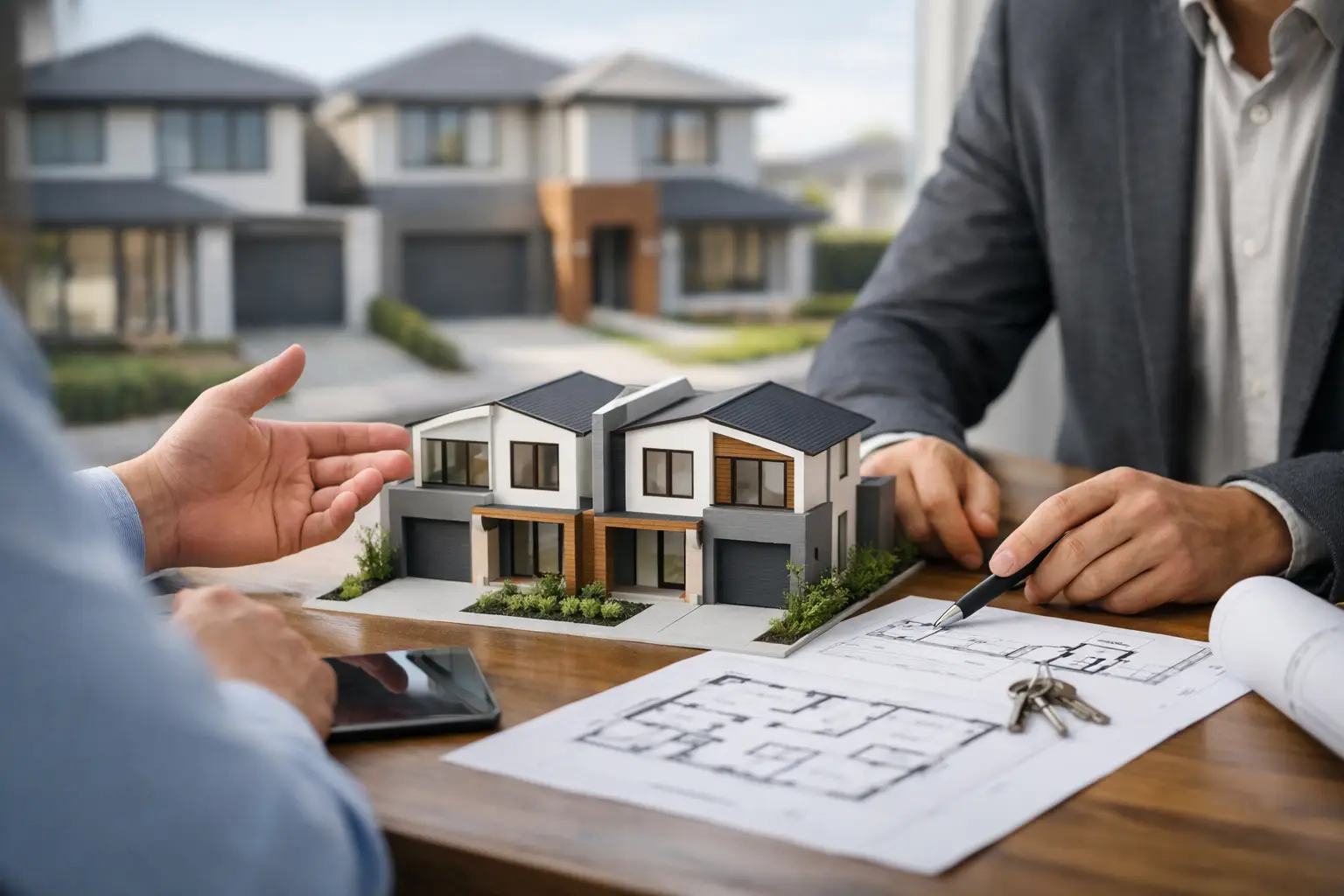
A dual occupancy builder is not just there to put up two dwellings on one block. They are there to make a complex project stack up on paper, pass through council, and stand up properly once people are living in it. That distinction matters, because dual occupancy builds have more moving parts than a standard new home and far less room for guesswork.
For many Melbourne and Victorian property owners, dual occupancy is an attractive way to make better use of land, create space for extended family, or improve the return on a site they already own. But the outcome depends heavily on who is managing the design, approvals and construction from day one. A poor decision early can show up later as planning delays, budget blowouts, awkward layouts, or defects in the parts of the build you cannot see once plaster goes on.
What a dual occupancy builder actually does
At a practical level, a dual occupancy builder coordinates far more than construction. The right builder helps assess whether the site suits the intended outcome, works with designers and consultants to develop a compliant scheme, manages permit pathways, prices the project accurately, and delivers both dwellings with discipline on site.
That process needs to be joined up. If design happens in isolation from buildability, the documents can look fine on paper but create problems once construction starts. If pricing is rushed before the plans are properly resolved, allowances can mask the true cost. If site management is loose, the pressure of building two homes at once can expose every weak point in supervision, trade coordination and quality control.
A capable builder brings those pieces together early. That does not make every dual occupancy project simple. It does make the risks easier to see and easier to manage.
Why dual occupancy projects go wrong
Most problems do not start with the slab or the frame. They start earlier, when owners are told what they want to hear instead of what the project requires.
Sometimes the issue is optimistic feasibility. A block might technically allow dual occupancy, but setbacks, private open space, overshadowing, crossover constraints, drainage, easements or neighbourhood character controls can compromise the design. Sometimes the issue is cost. Owners compare a headline estimate from one builder with a fixed and properly documented price from another, without realising the cheaper figure may leave out site works, service upgrades or specification detail.
Then there is the construction side. Two dwellings mean tighter access, more service coordination, more compliance checks and more pressure on sequencing. Waterproofing, flashing, fire separation, acoustic treatment, stormwater management and structural bracing all have to be done correctly. These are not glamorous line items, but they are often where long-term quality is won or lost.
How to assess a dual occupancy builder
If you are comparing builders, look past the display finishes and ask how they run projects. Dual occupancy work rewards discipline more than sales polish.
Start with planning and design coordination
A strong builder should be able to talk clearly about the path from concept to approval. That includes council requirements, ResCode considerations, consultant input and the effect of site constraints on layout and build cost. If a builder cannot explain how planning decisions affect construction, that gap usually becomes your problem later.
You want a team that understands that design quality is not just about presentation. It is about whether the dwellings function well, achieve privacy, make efficient use of the block and can be built without expensive redesign midstream.
Ask how pricing is prepared
Fixed-price contracting only has value if the scope is genuinely defined. Ask what is included, what assumptions have been made, and where provisional sums or allowances still apply. On a dual occupancy project, unclear pricing can become expensive quickly because duplicated services, civil works and authority requirements add up fast.
A reliable builder will not pretend every unknown can be eliminated at the start. Latent site conditions and authority-driven changes can still occur. What matters is whether the pricing has been prepared with care and whether the builder is upfront about the areas that need further investigation.
Look at build quality where it counts
This is where experienced clients separate marketing from workmanship. Any builder can show nice tiles and tapware. The better question is what sits behind them.
Ask about structural inspections, waterproofing systems, membrane application, flashing details, wall bracing, termite protection, fire-rated construction where required and how defects are picked up before handover. A builder who is serious about quality should be comfortable discussing these details. They should also be using licensed, insured and properly managed trades, not just whoever is available that week.
Understand who is managing the job
Dual occupancy builds need hands-on project management. There should be a clear line of responsibility from office to site, with documented communication and regular progress tracking. If you are dealing with one person during sales and someone entirely different once the contract is signed, ask how continuity is maintained.
This matters because decisions do not stop once construction begins. Site conditions change. Authorities request amendments. Services need coordination. Materials need lead times managed. Owners need clear answers, not vague updates.
The trade-offs in dual occupancy design and build
Not every project should push for maximum yield. In some cases, squeezing two oversized dwellings onto a block leads to compromised amenity, difficult approvals and a poorer finished product. A smarter solution may be two well-proportioned homes with better light, more usable open space and simpler construction.
There is also a balance between specification and return. Owner-occupiers may place more value on upgraded finishes, storage, acoustic separation and long-term durability. Investors may focus more tightly on cost control and rental appeal. Neither approach is wrong, but the builder should understand the purpose of the project before documents and budgets are finalised.
Time is another factor. A builder who takes planning, documentation and pricing seriously may appear slower at the front end. In reality, that work often reduces disruption later. Rushed starts tend to create expensive pauses once unresolved details hit the site.
Why local experience in Victoria matters
Dual occupancy delivery in Victoria is shaped by local planning controls, consultant coordination, authority requirements and the realities of building on suburban sites with limited access. A builder working in Melbourne and regional Victoria needs to understand more than the National Construction Code. They need to know how projects move through councils, what tends to hold them up, and how to keep momentum without cutting corners.
That local experience also affects procurement and trade supervision. Site access in established suburbs, stormwater tie-ins, demolition interfaces, neighbour management and service authority coordination can all become real issues on the ground. A builder with proven local systems is better placed to handle them before they turn into delays.
What the right process looks like
A well-run dual occupancy project usually follows a clear sequence. It starts with feasibility and a realistic brief. Then the design is developed with planning and buildability in mind. Permits and documentation are resolved properly. Pricing is prepared against a defined scope. Construction is managed with inspections, quality checks and disciplined sequencing. Handover happens only after defects and compliance items have been addressed.
That sounds straightforward, but it only works when the builder values process as much as the finished result. Builda Group approaches dual occupancy projects this way because the success of the build is decided long before the keys are handed over. It is decided in the details that prevent movement, leaks, cracking, rework and disputes.
Choosing a builder with the right mindset
The best dual occupancy builder for your project is usually the one asking the hardest questions early. Not to make the process harder, but to keep it honest. They will test the brief, challenge weak assumptions, explain site constraints and be clear about cost drivers before construction begins.
That approach can feel less exciting than bold promises and fast estimates. It is also far more useful when you are committing serious money to a project with planning complexity and two homes to deliver instead of one.
If you are weighing up builders, pay attention to how they talk about the unseen parts of the job. The structure, waterproofing, compliance, supervision and documentation are what protect the value of the project long after the render and paint have faded a little. A dual occupancy build should work on completion day, and still be working properly years later. That is the standard worth building to.