
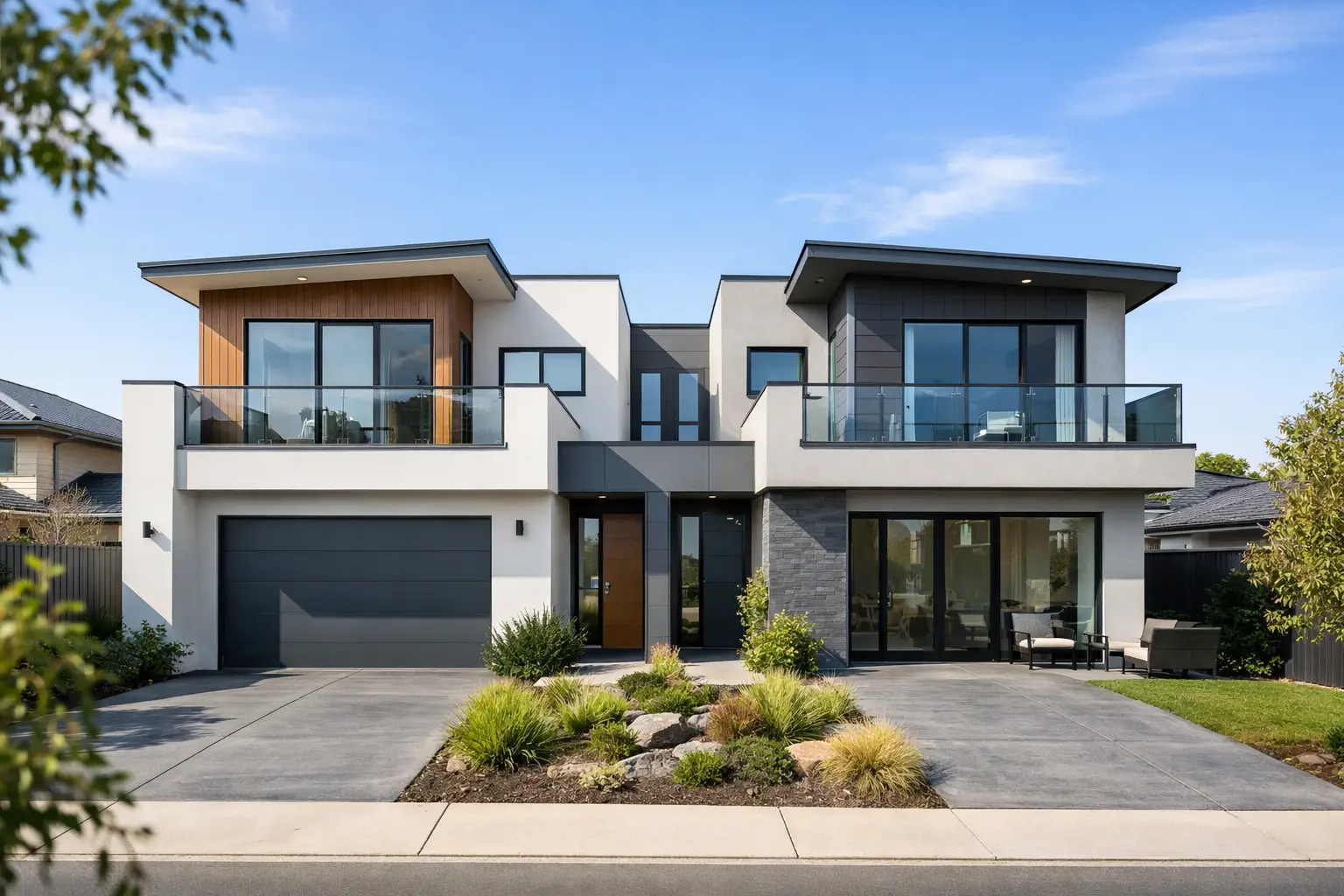
A lot of owners first look at their block and see one house. A builder sees options, constraints, and a planning pathway. That is really how dual occupancy works – taking a single residential site and assessing whether it can support two dwellings legally, practically, and profitably.
For some, the goal is to create a second home for family. For others, it is about rental income, downsizing without leaving the suburb, or improving the value of the land. The opportunity can be strong, but it only stacks up when the design, council requirements, servicing, buildability and budget all line up.
What dual occupancy means in practice
In simple terms, dual occupancy is the development of two dwellings on one lot. That can mean keeping the existing home and building one at the rear, or demolishing the original house and constructing two new homes side by side or one behind the other, depending on the site.
This is where owners often get tripped up. Dual occupancy is not one fixed product. The right approach depends on zoning, overlays, lot dimensions, private open space requirements, setbacks, overlooking rules, vehicle access, drainage, easements and neighbourhood character controls. A block that looks large enough on paper can still be difficult once these factors are tested properly.
In Victoria, the answer usually starts with town planning, not floorplans. Before anyone talks finishes or facades, the site needs to be assessed for what council is likely to support and what can be built efficiently.
How dual occupancy works from site assessment to handover
A disciplined dual occupancy project follows a clear sequence. Skip steps early and the problems usually appear later, when they are slower and more expensive to fix.
1. Site feasibility comes first
The first stage is working out whether the block can genuinely support two dwellings. That means reviewing title documents, zoning, overlays, minimum garden area requirements where applicable, easements, slope, existing services and local planning controls.
This stage should also test buildability. Can you get compliant driveway access? Is there enough room for turning circles, bin storage and private open space? Will retaining walls, drainage upgrades or service relocations add serious cost? A site can be town-planning compliant and still be a poor building proposition if the hidden costs are too high.
2. Concept design shapes the yield
Once the site is assessed, a concept design is prepared around what the land can support. The objective is not just fitting in two dwellings. It is designing homes people actually want to live in or rent, while still meeting council requirements.
Good dual occupancy design is a balancing act. Push too hard on floor area and you can compromise light, open space or car access. Be too conservative and you may leave value on the table. The strongest outcomes usually come from practical design decisions early, not cosmetic changes later.
3. Planning approval may be required
Many dual occupancy projects in Victoria require a planning permit, depending on the site and the scope of work. This is where council assesses the proposal against the planning scheme, neighbourhood character, amenity impacts and development standards.
The timeline here can vary. Straightforward sites tend to move faster. Blocks with overlays, unusual dimensions, significant slope or neighbour objections can take longer. Owners need to go into this stage with realistic expectations. Planning is not just form filling. It is a technical process that needs to be managed properly.
4. Working drawings and permits follow
After planning approval, the project moves into detailed documentation. This includes architectural drawings, structural engineering, energy reports, drainage design and other consultant input needed for building approval and construction.
This is also where quality builders earn their keep. A dual occupancy build has more interfaces, more compliance detail and more pressure on layout efficiency than a standard single dwelling. If the documentation is vague, site issues multiply. If the build methodology is weak, defects often show up in the less visible elements – waterproofing, flashing, bracing, slab preparation and service coordination.
5. Construction is two builds sharing one site
During construction, a dual occupancy project needs tight sequencing. Trades, materials, access and inspections all need to be coordinated with far less margin for error than on a simple greenfield home.
That is especially true where an existing dwelling is retained. Working around occupied homes, protecting existing structures, managing site access and staging service upgrades adds complexity. A builder with genuine project management discipline matters here. The build needs to be controlled, not improvised.
Titles, ownership and what happens after construction
One of the most common questions around how dual occupancy works is whether the two homes can be sold separately. The answer is: it depends on the title structure and whether subdivision is approved.
Some dual occupancy projects remain on a single title. That can suit owners planning to live in one dwelling and lease the other, or keep both as long-term family assets. Other projects include a subdivision process so each home sits on its own title and can be sold independently.
Subdivision involves its own approvals, servicing requirements and compliance steps. Separate water, sewer, power and sometimes other authority conditions need to be addressed. This should never be treated as an afterthought. If the project only makes sense when sold separately, the subdivision pathway needs to be factored in from day one.
The costs behind a dual occupancy project
There is no honest way to talk about dual occupancy without talking about cost pressure. Owners often focus on the upside and underestimate what sits underneath the build contract.
There is the land condition itself, demolition if required, consultant fees, planning costs, authority contributions, service upgrades, crossover works, drainage, landscaping, subdivision costs and holding costs. Then there is the build cost, which should reflect the real standard of construction, not a low headline number that grows once the contract is signed.
This is why fixed-price clarity matters. On a dual occupancy project, vague allowances create risk quickly. Detailed documentation, realistic site assessment and disciplined scope control protect the budget far better than optimistic estimates.
The main trade-offs owners should understand
Dual occupancy can be a smart use of land, but it is not automatic value. The project has to suit the block, the market and your goals.
If you retain the front home and build at the rear, the upfront cost may be lower than a full knockdown rebuild, but the design can be more constrained and access can become tight. If you demolish and build two new dwellings, you usually get a cleaner design outcome and stronger consistency across both homes, but your upfront spend and holding costs rise.
There is also the question of buyer demand. In some suburbs, a well-designed dual occupancy project performs strongly because downsizers, young families and investors want low-maintenance, well-located homes. In others, the market may still favour one larger family residence on a full block. The best answer is not theoretical. It comes from testing the local market and matching the development approach to the area.
Why build quality matters more on dual occupancy sites
Dual occupancy projects compress a lot into one site. That puts more pressure on structure, drainage, acoustic separation, waterproofing and detailing. If these elements are handled poorly, the problems are harder to hide and more expensive to rectify later.
That is why experienced owners look past surface finishes. The things that determine long-term performance are often the things you do not notice at handover – whether the slab is right, whether flashing has been installed correctly, whether wet areas are properly waterproofed, whether framing and bracing have been executed to standard, and whether stage inspections are documented and followed through.
For a project like this, craftsmanship is not a marketing line. It is risk control.
Is dual occupancy the right move for your block?
The right project starts with the right question. Not, “Can I fit two dwellings here?” but, “Can I create two dwellings here that council will support, the market will want, and a builder can deliver properly within budget?”
That is the standard worth applying before you commit to design costs or lodge permits. A good dual occupancy outcome is never just about maximising yield. It is about producing homes that work on paper, on site and over the long term.
For owners across Melbourne and regional Victoria, that usually means getting clear advice early, pressure-testing the numbers, and choosing a builder who understands both planning reality and construction detail. Builda Group approaches dual occupancy that way for a reason. It is the difference between a project that looks good in concept and one that stands up once the work starts.
If you are considering dual occupancy, start with the block, the controls and the build path. The finish selections can wait. The quality of the early decisions is what gives the whole project its strength.