
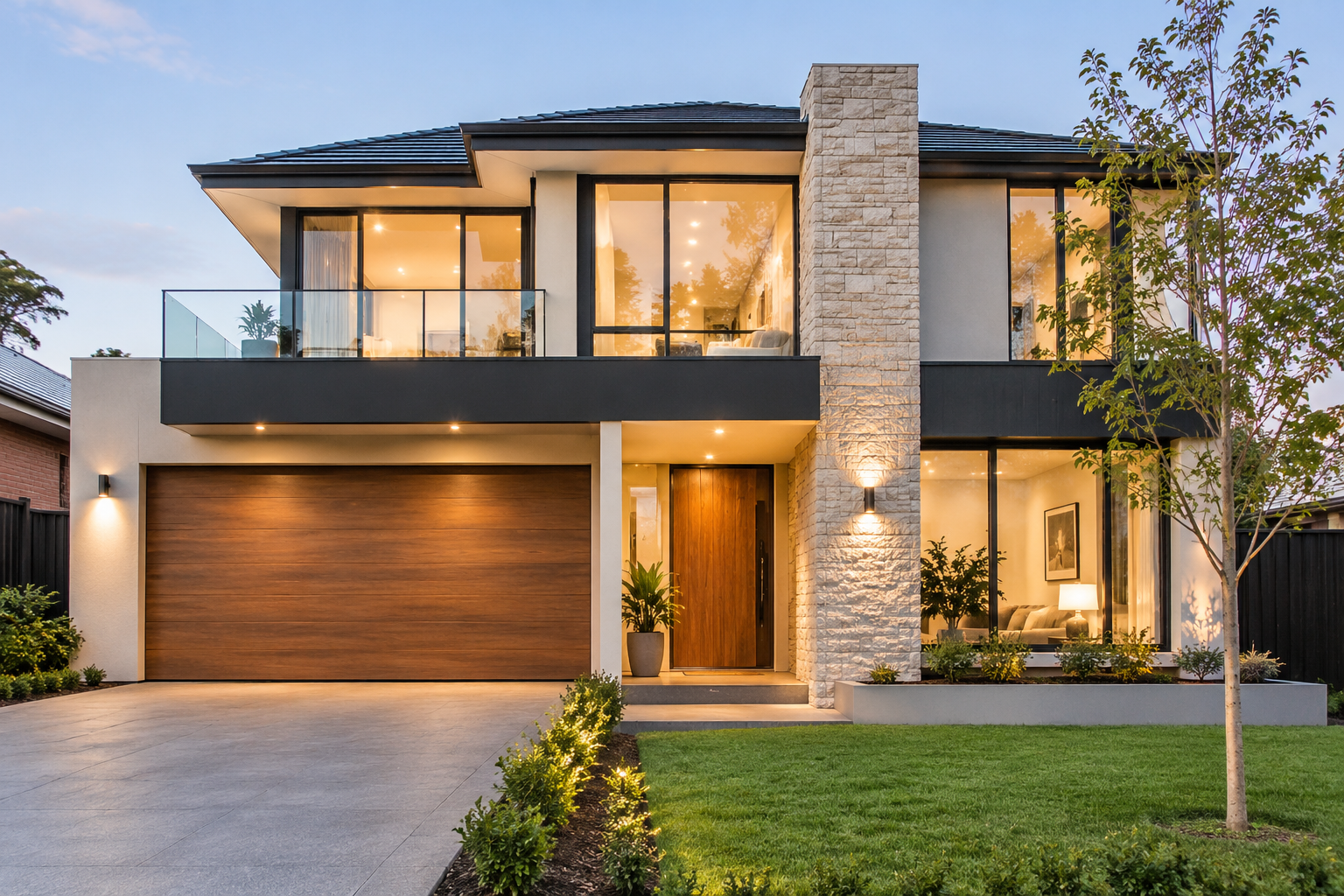
| Quick Answer: Building a custom home in Melbourne commonly takes around 6–15 months from the first design discussion to handover. Allow roughly 4–8 months for design, documentation and approvals, followed by about 10–16 months on site. Complex designs, planning permits, difficult blocks and changes can extend the timeline. |
If you’re planning to build a custom home in Melbourne, the first steps involve more than finalising a floor plan. You’ll need to consider your block, design requirements, engineering, permits and budget before construction can begin. Each stage needs time and careful coordination, and decisions made early can affect how smoothly the project moves forward.
Understanding what happens at each stage gives you a clearer picture of the work involved and helps you plan ahead, especially if you have a fixed budget, a land settlement date or a preferred time to move in.
A typical custom home timeline
Each project follows its own schedule, and some tasks can overlap. These indicative ranges help show where the time usually goes:
| Stage | Typical allowance | What happens |
| Brief, budget and site review | 2–6 weeks | Confirm needs, budget, block conditions, and feasibility. |
| Design and documentation | 3–6+ months | Develop plans, coordinate engineering, specifications, and selections. |
| Permits and pre-construction | 2–6+ months | Obtain required approvals, finalise contract details and prepare scheduling. |
| Construction | 04–12 months | Site works, foundations, frame, lock-up, services, fit-out and finishes. |
| Final checks and handover | 2–6 weeks | Complete inspections, resolve outstanding items and arrange handover. |
The stages are not always additive: paperwork, procurement and scheduling may run alongside other work. Your builder should set out the project-specific dates and assumptions in writing.
Factors That Affect Your Custom Home Building Timeline
The time it takes to complete a custom home depends on more than the size of the house. A few things can affect the schedule, even when the design and budget are already in place. Some of the main factors are:
Planning requirements: A building permit is required before construction. Some properties also need a planning permit, depending on zoning, overlays, and the proposal. Heritage controls, neighbourhood character, bushfire considerations, or design variations can add assessment steps. Check the requirements early with your council and building surveyor.
The block itself: Sloping land, poor soil, restricted access, demolition, drainage or service upgrades may need extra design and site work.
Design changes and selections: Moving walls or changing windows, cabinetry and finishes after documentation or construction starts can affect approvals, orders and trade bookings.
Weather, trades and materials: Heavy rain can interrupt earthworks and concrete work. Product lead times and trade availability can also shift the schedule, especially where a home uses less common finishes or bespoke elements.
Custom home vs. standard home: timeline at a glance
| Build type | Indicative overall timing | Why it differs |
| Custom home | About 18–24 months | Individual design, detailing, and site-specific decisions. |
| Straightforward project home | Often shorter, but varies | Repeatable plans and established selections can simplify preparation. |
| Complex / luxury custom home | May exceed 24 months | Scale, detailed finishes, approval needs, and site constraints. |
These are broad planning comparisons, not a promise or a like-for-like industry benchmark.
How to keep your build on track
In Victoria, domestic building contracts worth more than $10,000 must include key timing information, including a start date or how it will be determined, delay allowances and a finish date or construction duration. Read the contract carefully and seek independent advice if anything is unclear.
- Set a realistic budget and confirm finance before committing to detailed design.
- Review the site early, including soil, levels, access and planning controls.
- Finalise major layouts, fixtures and finishes before construction wherever possible.
- Ask for a written program with milestones, allowances and a clear process for variations.
- Keep decisions and approvals moving, and nominate one person to coordinate questions.
Plan your custom home with Builda Group
The timeline depends on the design, site and approval pathway. Builda Group’s custom home building team works on single- and double-storey homes and can review your project scope, available plans and target move-in date as part of early planning.
Frequently asked questions
Can a custom home in Melbourne be built in 6 months?
It is possible for a single storey project under favourable conditions, but 6 months from first design meeting to handover is an ambitious target. Confirm what the builder counts as the start and finish.
Does a planning permit affect the timeline?
It can. Whether one is needed depends on the property and design. Council assessment, referrals or objections may extend pre-construction.
When can I move into the new home?
You can move in once the required occupancy permit has been issued. Victoria says the building must not be occupied before this permit is received.
What should the building contract say about timing?
Check the start-date mechanism, construction period or finish date, and allowances for delays. Make sure the program and contract terms are consistent.