
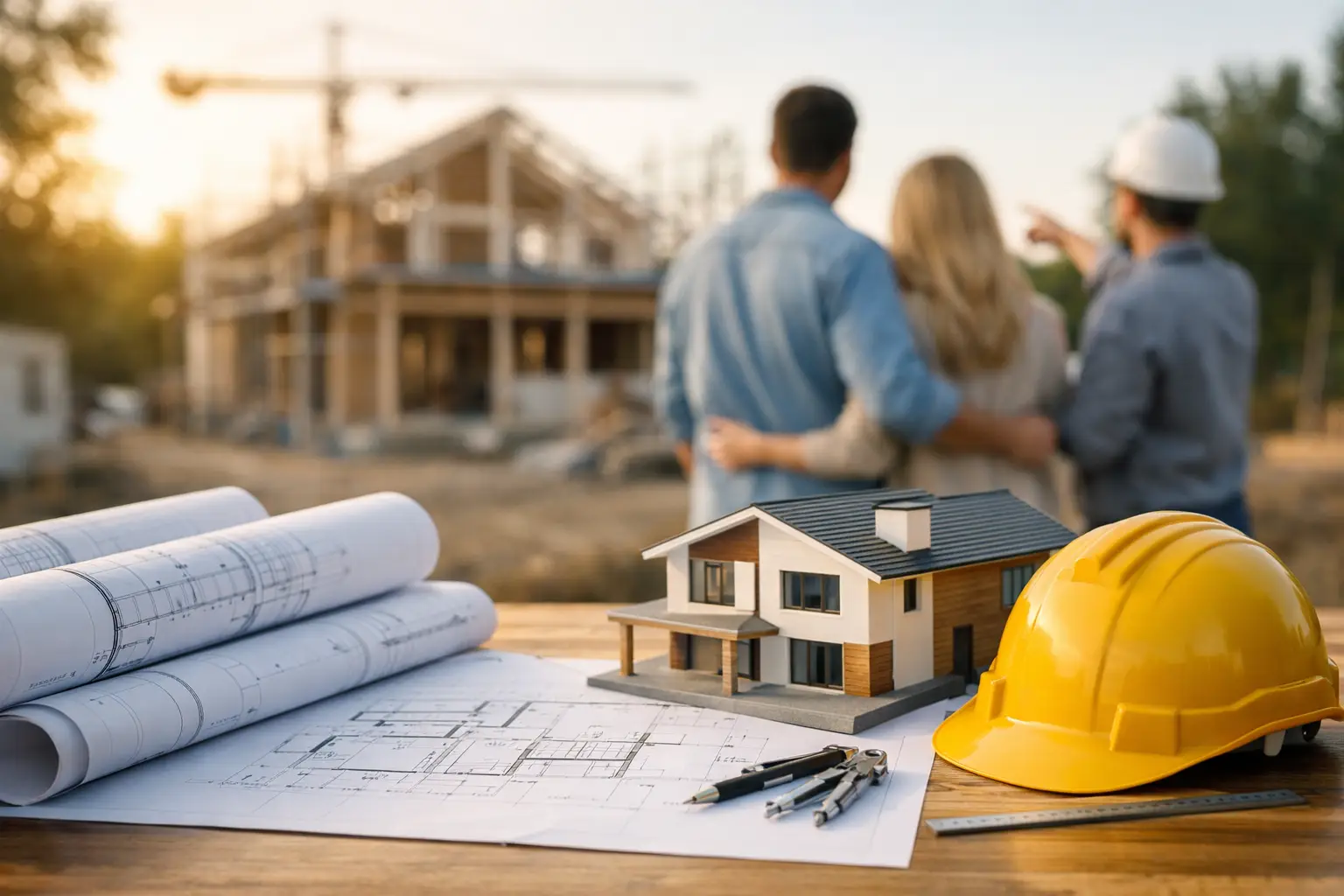
A custom home usually goes wrong long before the slab goes down. It happens when the brief is vague, the budget is unrealistic, or too many decisions are left until site works have already started. If you want to understand how to build custom home the right way, the real work starts well before construction. Good outcomes come from disciplined planning, clear documentation, realistic allowances, and a builder who treats structural quality as seriously as the finished look.
How to build a custom home without costly surprises
The first step is being honest about what you are building and why. Some clients want a long-term family home with room to grow. Others are replacing an outdated dwelling, rebuilding on a difficult block, or creating a dual occupancy outcome that needs to stack up financially. Those are very different projects, and they should not be priced, designed, or managed the same way.
A proper custom build starts with the site, not the floorplan. Block fall, orientation, overlays, easements, access, soil conditions, stormwater requirements, and neighbourhood character controls all influence what is practical. A design that looks excellent on paper can become expensive very quickly if it ignores retaining, excavation, drainage, or council constraints. This is one of the biggest differences between a genuine custom process and a volume-builder approach. Custom means the home responds to the site, not the other way around.
Once the site has been assessed, the design brief needs to become specific. That means more than saying you want four bedrooms, an open-plan kitchen, and good natural light. You need to define how the home will actually be used. Do you work from home full-time? Do you need separation between kids’ zones and living areas? Is ageing in place a factor? Are you trying to maximise resale, or is this a home you plan to keep for decades? Those answers affect layout, materials, services, and where it makes sense to spend.
Budget first, finishes second
A lot of custom home stress comes from backwards decision-making. People fall in love with images, fixtures, and high-end finishes before they understand the construction cost of the building itself. The shell of the home, the structural system, engineering, permits, services, site costs, waterproofing, windows, roof plumbing, insulation, and compliance work are not glamorous, but they are not optional either.
If you are serious about learning how to build a custom home well, treat the budget as a working tool, not a rough guess. You need clarity around the full project cost, including design, consultant fees, demolition if required, permits, authority requirements, site preparation, construction, and a sensible contingency for unknowns. Fixed-price contracts matter here, but only when the documentation behind them is thorough. A fixed price based on assumptions and missing detail is not real certainty. It is just deferred variation risk.
This is where experienced builders add value early. They can tell you whether your expectations match your budget, where the cost pressure points are, and which selections are worth the investment. In many homes, money is better spent on glazing performance, drainage, flashing, waterproofing, heating and cooling design, and joinery function than on cosmetic upgrades that do little for comfort or durability.
Design and documentation are where quality starts
Good building is not guesswork on site. It comes from complete, coordinated documents before the first trade arrives. Architectural drawings are only one part of that picture. You also need engineering, energy reports, soil tests, site surveys, specifications, schedules, and enough resolved detail that the builder is not forced to fill in gaps during construction.
When documentation is weak, the problems show up later as delays, disputes, and extra costs. Trades are left interpreting intent. Materials are substituted without proper review. Junctions between systems are rushed. That is often where defects begin – not in the obvious surface finishes, but in the hidden details around waterproofing, membrane terminations, cavity flashings, roof penetrations, subfloor ventilation, and structural bracing.
A well-run custom home build gives those details the attention they deserve. It also creates a cleaner approval pathway, because consultants and certifiers are working from a complete set of information instead of chasing amendments midstream.
Permits, approvals, and site readiness
In Victoria, approvals can shape both timing and design. Depending on the block and the proposal, you may need planning approval before building permit documentation is finalised. Bushfire, flood, heritage, environmental, or neighbourhood character controls can all affect the scope of work. This is not the part of the process most clients get excited about, but it can determine whether the project runs smoothly or stalls for months.
Site readiness matters just as much. Before building starts, you want confidence that demolition, service disconnections, temporary protections, access conditions, and preliminary site works have been properly planned. Tight urban blocks, narrow frontages, sloping sites, and regional conditions all require different construction logistics. If those logistics are not considered early, they become expensive later.
Choosing the right builder for a custom project
Not every builder is set up for custom work. Some are good at standardised delivery with limited flexibility. Others can manage architect-led homes, difficult sites, and detailed specifications because they have the trade depth and project discipline to do it properly.
When assessing a builder, look past marketing language. Ask how they manage documentation reviews, selections, construction programming, site supervision, inspections, and defect prevention. Ask who is accountable day to day. Ask how variations are handled, what is included in the contract, and how quality is checked at each stage. If the answers are vague, the project probably will be too.
The best custom builders are usually direct and practical. They will tell you where the risks are. They will push back when something does not make construction sense. They will care about what sits behind the plaster and cladding, not just what photographs well at handover. That kind of honesty saves money and protects the build.
Construction: where execution separates good from average
By the time construction starts, most of the major thinking should already be done. Site works, slab or subfloor, framing, lock-up, rough-in, waterproofing, linings, joinery, fit-off, and completion all need to follow an organised sequence, with proper supervision and inspection points throughout.
This is where clients often assume quality is visible. Sometimes it is, but often it is not. The long-term performance of a home depends heavily on unseen work. Is the framing straight and compliant? Has the roof plumbing been installed correctly? Are window flashings detailed properly? Was the wet area prepared and waterproofed to standard before tiling? Is the bracing installed as engineered? Are penetrations sealed, drainage falls correct, and insulation fitted without gaps? These details are what stop small problems turning into expensive failures.
Communication during construction also matters. A custom build should not feel chaotic. Clients need to know what stage the project is at, what decisions are upcoming, and whether any issues need resolution. Clear reporting, staged inspections, and documented processes reduce stress because they replace assumption with evidence.
How to build a custom home that still works in ten years
The best custom homes are not just impressive at completion. They are practical, comfortable, and durable years later. That means thinking beyond appearance.
Materials should suit the site and level of maintenance you are prepared to manage. Layout should reflect how your household will change over time. Storage should be designed properly, not added as an afterthought. Natural light and cross-ventilation should be considered with orientation, not just window size. Energy efficiency should come from the full building fabric and services strategy, not one isolated product upgrade.
There are always trade-offs. Full-height glazing can look excellent, but if orientation and thermal performance are wrong, comfort suffers. Premium finishes can lift presentation, but if they consume budget needed for drainage, insulation, or structural upgrades, the decision can work against you. A good custom home balances design ambition with buildability, maintenance, and long-term performance.
That is also why post-handover support matters. Even a well-built home settles, materials move, and minor adjustments can be part of the process. What matters is whether the builder stands behind the work with proper systems, clear accountability, and the confidence that comes from doing the job properly in the first place.
For homeowners across Melbourne and regional Victoria, that is the real answer to how to build custom home successfully. Start with the site, get the documentation right, be disciplined with budget, and choose a builder who values structural integrity as much as design. The home you live in every day will reflect those decisions long after the keys are handed over.