
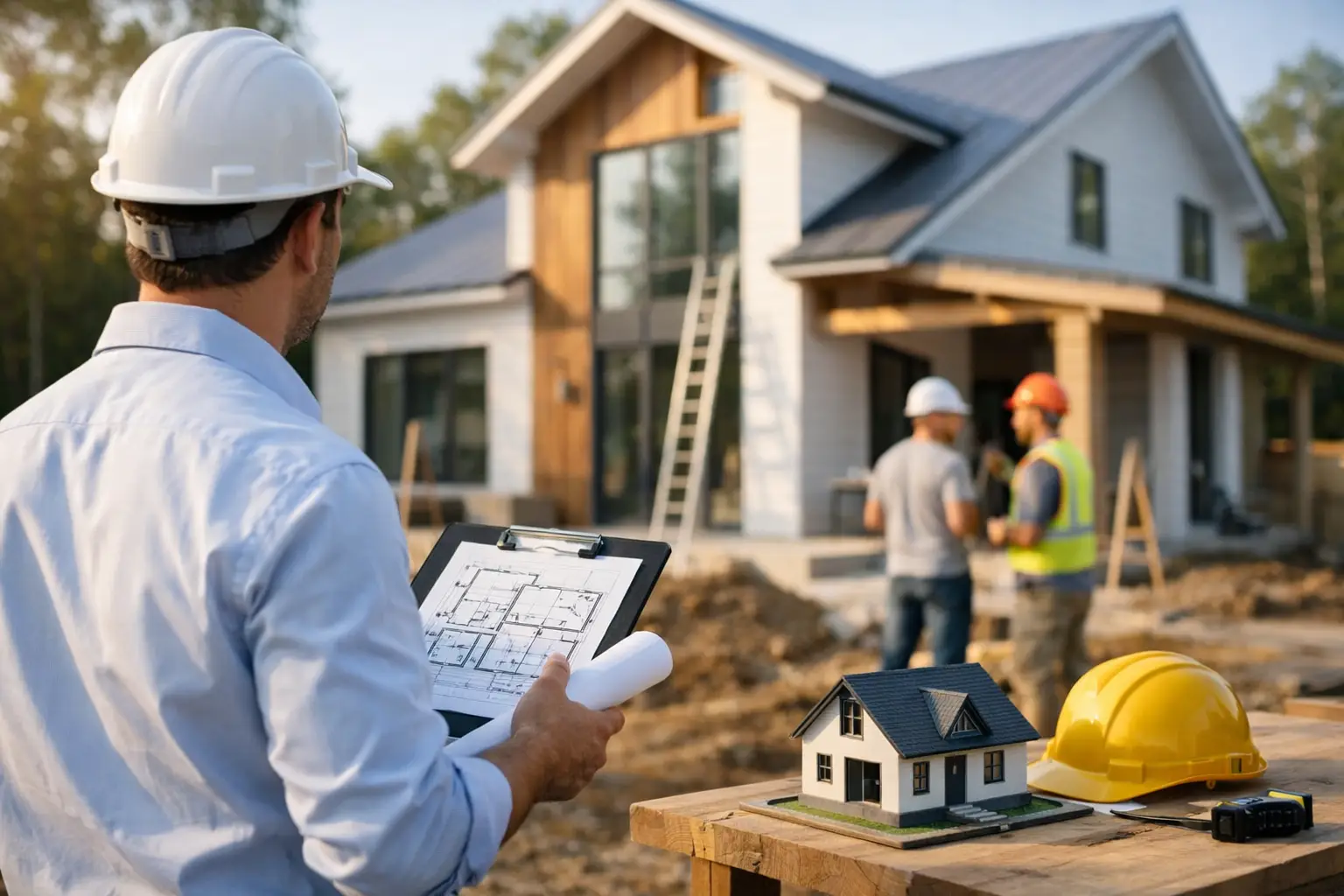
If you’ve ever watched a home build drift because trades were poorly sequenced, costs kept moving, or site issues were picked up too late, you already understand why a project managed home build matters. Good homes are not held together by finishes alone. They are delivered by planning, coordination, inspections and decisions made properly at the right time.
For many homeowners in Melbourne and across Victoria, the real challenge is not choosing tiles or finalising a façade. It is keeping the whole job controlled from concept through to handover. That includes design coordination, permit pathways, cost clarity, trade management, compliance, quality checks and practical site leadership. When those parts are fragmented, the risk usually lands with the owner.
What a project managed home build actually involves
A project managed home build is a building process where one accountable team oversees the moving parts of the job rather than leaving the owner to coordinate consultants, permits, trades and site decisions themselves. In practice, that means the build is treated like a disciplined delivery process, not a collection of separate tasks.
At the front end, this starts with scope definition. The design needs to match the site, planning controls, engineering requirements and budget. If that work is rushed, the consequences show up later as redesigns, variations or construction delays. A properly managed project deals with those issues early, while decisions are still relatively inexpensive to make.
Once the design is progressing, project management continues through estimating, documentation, permits and procurement. During construction, it becomes even more important. Trades need to be booked in the correct sequence. Materials need to arrive when required. Inspections need to happen before work is covered up. Site issues need to be resolved before they become defects or hold-ups.
That is the difference between supervision in name only and actual project management. One is reactive. The other is structured, documented and accountable.
Why project management matters more than most clients realise
The visible parts of a home get the attention. Joinery, stone, lighting and paint colours are easy to judge because they sit in front of you. The harder part to assess is the build quality behind the plaster and under the roof line. Waterproofing, flashing, bracing, structural fixings and set-out accuracy are not glamorous, but they are what determine whether the home performs over time.
A project managed home build creates control around these details. It gives the builder room to inspect work stage by stage, coordinate licensed trades properly and catch issues before they are buried under the next trade. Without that discipline, defects are often discovered when rectification is expensive and disruptive.
It also matters for budget protection. Homeowners often assume cost blowouts come from dramatic changes in the market or unexpected site conditions alone. Sometimes they do. More often, they come from incomplete documentation, unrealistic allowances, poor trade coordination or decisions made too late. Strong project management reduces these avoidable risks by making the process clearer from the start.
The stages that need tight control
Every residential build has pressure points. In custom homes, knockdown rebuilds and major renovations, those pressure points tend to appear before construction starts and again at key handover stages between trades.
The first pressure point is design and documentation. Architects, designers, engineers, energy assessors and surveyors may all be involved. If those inputs are not coordinated properly, the owner can end up with drawings that look resolved but still leave unanswered questions for construction. That usually leads to site clarifications, delays or pricing changes.
The second pressure point is permits and approvals. Depending on the project, planning approval, building permits, engineering and authority requirements can all affect timing. A builder with strong project oversight does not treat this as paperwork to chase later. It is part of the delivery strategy from day one.
The third pressure point is site execution. Excavation, slab, framing, services rough-in, waterproofing, external envelope and fit-off each depend on the previous stage being completed correctly. If one trade leaves work behind that is out of tolerance or non-compliant, every following stage is affected.
The final pressure point is practical completion and handover. This is where rushed builders try to catch up time. A properly managed build should reach handover with defects minimised because checks have happened all the way through, not just at the end.
What homeowners gain from a professionally managed build
The biggest benefit is accountability. Rather than juggling separate parties and trying to work out who is responsible for what, the owner has a clear point of contact and a documented process. That does not eliminate every challenge. Construction still involves weather, site conditions, approvals and the occasional unforeseen issue. What it does change is how those issues are handled.
A professionally managed build also creates better decision timing. Owners are guided through selections, approvals and site milestones when those decisions need to be made, not after delays have already started. That makes the process calmer and far more efficient.
There is also a quality benefit that is often underestimated. Builders who manage projects properly tend to run cleaner sites, maintain stronger subcontractor standards and keep better records. Those habits are not cosmetic. They usually reflect a company that takes workmanship seriously in both seen and unseen areas of the build.
For many clients, fixed-price clarity is another major advantage. Fixed pricing only works properly when scope, documentation and inclusions are genuinely understood. Otherwise, a low contract figure can become expensive later. Good project management supports fixed pricing because the work has been thought through in detail before the contract is signed.
Where some project managed home builds fall short
Not every builder who uses the term is delivering the same level of service. In some cases, project management simply means sending updates while the client still carries the burden of coordinating consultants, clarifying documentation and resolving site problems. That is not true end-to-end management.
The other weak point is over-reliance on appearance. A polished schedule and nice client portal mean very little if site inspections are inconsistent or technical details are left to chance. A premium build should be judged by what is happening at frame stage, waterproofing stage and lock-up stage, not just by how the kitchen looks in the final photos.
There is also a trade-off to acknowledge. A properly managed build is not the cheapest way to build. It involves more discipline, more oversight and a higher standard of execution. For owners who care about durability, fewer defects and a more controlled process, that is usually money well spent. For those shopping on headline price alone, it may feel like an unnecessary layer until problems start appearing.
How to assess whether a builder can genuinely manage your home build
The best place to start is not with marketing language. Ask how the project is run in practice. Who manages the design interface? How are permits tracked? What inspections happen at each stage? Who is responsible for trade sequencing and site quality control? How are variations prevented, and how are they handled if they arise?
You should also look for signs of discipline in the builder’s overall approach. Fixed-price contracts, documented inclusions, licensed and insured trades, staged inspections and clear communication are all good indicators. So is a willingness to talk about structural details and compliance, not just finishes and selections.
A capable builder will be transparent about what is known, what still needs to be resolved and where genuine risks sit. That honesty matters. Residential construction always has variables, particularly on complex sites or renovation projects. The difference is whether those variables are identified early and managed properly, or left to become expensive surprises.
For clients seeking a higher standard of delivery, this is where an experienced builder stands apart. Builda Group approaches project management as part of build quality itself, because a home is only as strong as the process used to deliver it.
Why this approach suits custom homes, rebuilds and complex residential work
The more customised the project, the more valuable strong management becomes. Volume building systems are designed around repetition. Custom homes, architect-led builds, dual occupancy projects and major renovations are not. They involve more moving parts, more tailored details and more decisions that affect buildability.
That complexity does not have to make the process chaotic. With the right systems and site leadership, it can be managed with confidence. The key is having one team take responsibility for translating design intent into a buildable, compliant and well-executed outcome.
That is what owners are really paying for in a project managed home build. Not just someone to keep the calendar moving, but a builder who can protect the quality of the end result through every stage of the job.
If you are planning a home build, renovation or knockdown rebuild, look beyond the surface promise of management and ask how the work is actually controlled. The right answer will usually tell you as much about the finished home as the plans themselves.