
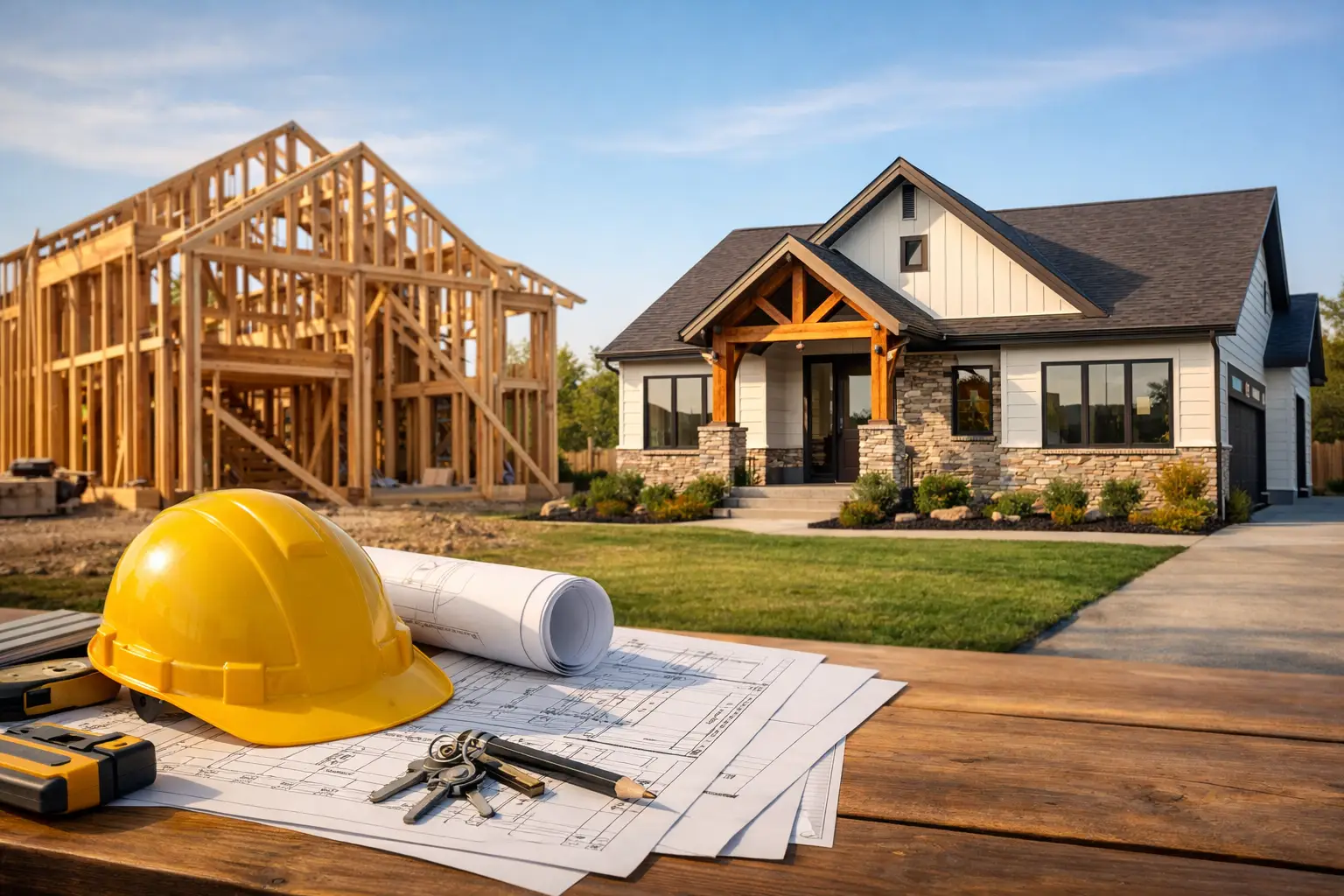
Most people start with the look of the home – the façade, the kitchen, the floorplan. Fair enough. But if you are asking what is a custom home build, the real answer goes well beyond finishes. A true custom build is about designing and constructing a home around the way you live, your site, your priorities and your long-term plans, then delivering it with proper engineering, planning, pricing and site control.
That is what separates a custom home from a standard project home with a few upgrades added in.
What is a custom home build?
A custom home build is a home designed and built specifically for one client, on one site, to suit that client’s needs, preferences and budget. It is not a pre-drawn design pulled from a catalogue and lightly modified. The layout, orientation, inclusions, structural details and construction approach are developed around the block, the brief and the level of finish required.
In practical terms, that can mean anything from an architect-designed family home on a sloping site in Melbourne, to a knockdown rebuild in an established suburb, to a dual occupancy project that needs careful council coordination. The common thread is that the home is not being forced into a standard template.
A proper custom build also means the builder is solving real construction conditions, not just selling an image. Soil classification, drainage, engineering, energy efficiency requirements, permit pathways, access constraints and structural detailing all influence the final result. If those parts are not handled properly, the home may look impressive on handover day but create expensive issues later.
How a custom build differs from a volume build
The easiest way to understand what is a custom home build is to compare it with a volume-built home.
A volume builder usually works from a fixed range of designs, standard inclusions and repeatable construction methods. That model can suit straightforward estates and buyers who want a simpler selection process. There is nothing wrong with that approach when the site and expectations align with it.
A custom build is different. The process is more tailored, the scope is more flexible and the builder needs stronger control over design coordination, trade sequencing and site-specific construction. That matters when you have a narrow lot, a difficult block, an existing neighbourhood character to respond to, or a brief that cannot be met by off-the-shelf plans.
The trade-off is that custom homes require more upfront planning and clearer decision-making. There are more variables to resolve before construction begins. But done properly, that planning gives you a home that performs better, suits your family properly and avoids the compromise of trying to retrofit your life into a standard design.
What is included in a custom home build?
This depends on the builder and the delivery model. In a disciplined end-to-end custom build, the scope usually starts well before construction and continues after handover.
The early stage often includes consultation, feasibility, concept planning and budget alignment. From there, the design is developed with the site conditions, engineering requirements and council or developer controls in mind. Working drawings, permits, specifications and contract documentation follow.
Once the build starts, the job is not just to put materials together. It is to manage trades, sequencing, inspections, compliance, quality control and variations with discipline. The best custom builders treat the hidden work with the same seriousness as the visible work. Waterproofing, flashing, structural bracing, slab preparation, frame accuracy and service rough-ins matter because they determine how well the home lasts.
Post-handover support also matters more than many owners realise. A builder who stands behind the work, rectifies defects properly and provides documented warranties is part of a well-run custom build, not an optional extra.
Why clients choose custom homes
For many families and owner-occupiers, the biggest reason is fit. They want a home that suits the way they actually live, not the way a display home suggests they should live.
That might mean better zoning between living areas and bedrooms, more storage, a working pantry, a quieter study, a ground-floor guest suite, a stronger connection to outdoor areas or improved natural light. It might also mean future-proofing for children, ageing parents or long-term resale value.
For property owners in established suburbs, a custom home often makes more sense because the site itself demands it. Orientation, setbacks, overlays, existing services, easements and neighbourhood context all affect what can be built. A generic plan rarely resolves those issues well.
There is also the quality factor. Clients choosing a custom build are usually less interested in surface-level marketing and more interested in getting the job done properly. They want clear documentation, licensed and insured trades, realistic allowances, proper inspections and workmanship that holds up over time.
The custom home process in the real world
A custom build should feel structured, not improvised. The exact sequence varies, but the process generally starts with understanding the brief, the budget and the site.
That first stage is where honest conversations matter. If the brief and the budget do not align, it is better to address it early than pretend everything will work itself out later. Good builders are direct about this because unrealistic expectations are one of the biggest causes of stress, redesign and cost movement.
After feasibility comes design development. This is where layout, orientation, planning controls, engineering considerations and material selections begin to come together. Once drawings and specifications are sufficiently resolved, the builder can prepare accurate pricing and contract documentation.
From there, permits and approvals are managed, construction is scheduled and trades are coordinated through each stage of the job. Slab, frame, lock-up, fixing and completion all require supervision and inspection. On a custom build, project management is not paperwork for its own sake. It is the system that keeps quality, cost and programme under control.
Cost, timeline and the part nobody likes hearing
Custom homes cost more than standard homes when the design, finish level and site complexity are higher. That should not be controversial. A home designed from scratch, built on a constrained or challenging site, with higher-quality materials and more detailed project oversight, is not the same product as a repeat design in a standard estate.
The bigger issue is not whether custom building costs more. It is whether the pricing is clear and whether the scope matches what you think you are paying for. A cheaper starting figure can become an expensive project if the documentation is vague, site costs are underestimated or allowances are unrealistic.
Timelines also vary. Weather, permit pathways, site access, authority approvals, material lead times and client selections all affect the programme. Anyone promising a one-size-fits-all timeline for a custom build is usually glossing over the complexity.
That said, longer does not always mean worse. A well-planned custom build often runs more smoothly because decisions are made properly upfront. Rushed documentation tends to cause delays later, and those delays are usually more expensive than careful planning at the start.
What to look for in a custom home builder
If you are considering a custom build, look past the glossy renders. Ask how the builder approaches fixed-price contracts, what is excluded, how variations are handled and who is responsible for day-to-day project management.
Ask about inspections, trade qualifications, insurance, structural warranties and how site quality is documented. Ask how they manage the parts of the job you will never see once the plaster is up. That is often where the difference between a solid home and a problem home is made.
It is also worth paying attention to how the builder communicates. Straight answers matter. A custom home is a significant investment, and confidence should come from competence and clarity, not sales language.
For that reason, many clients work with builders such as Builda Group because they want one accountable team managing the process from planning through to handover, with a strong focus on build integrity as well as finish.
Is a custom home build right for you?
If you want the cheapest possible path into a new home, a custom build may not be the right fit. If your block is simple, your brief is straightforward and a standard design genuinely meets your needs, a volume-built solution can make sense.
But if your site has constraints, your expectations are high, or you want a home built around how your family lives rather than around a standard template, custom building is usually the better path. It gives you more control, better alignment with the site and a stronger chance of ending up with a home that still works well years from now.
The key is not chasing custom for the label. It is choosing a process and a builder that can turn detail, planning and workmanship into a home that performs as well as it looks. That is the part worth getting right the first time.