
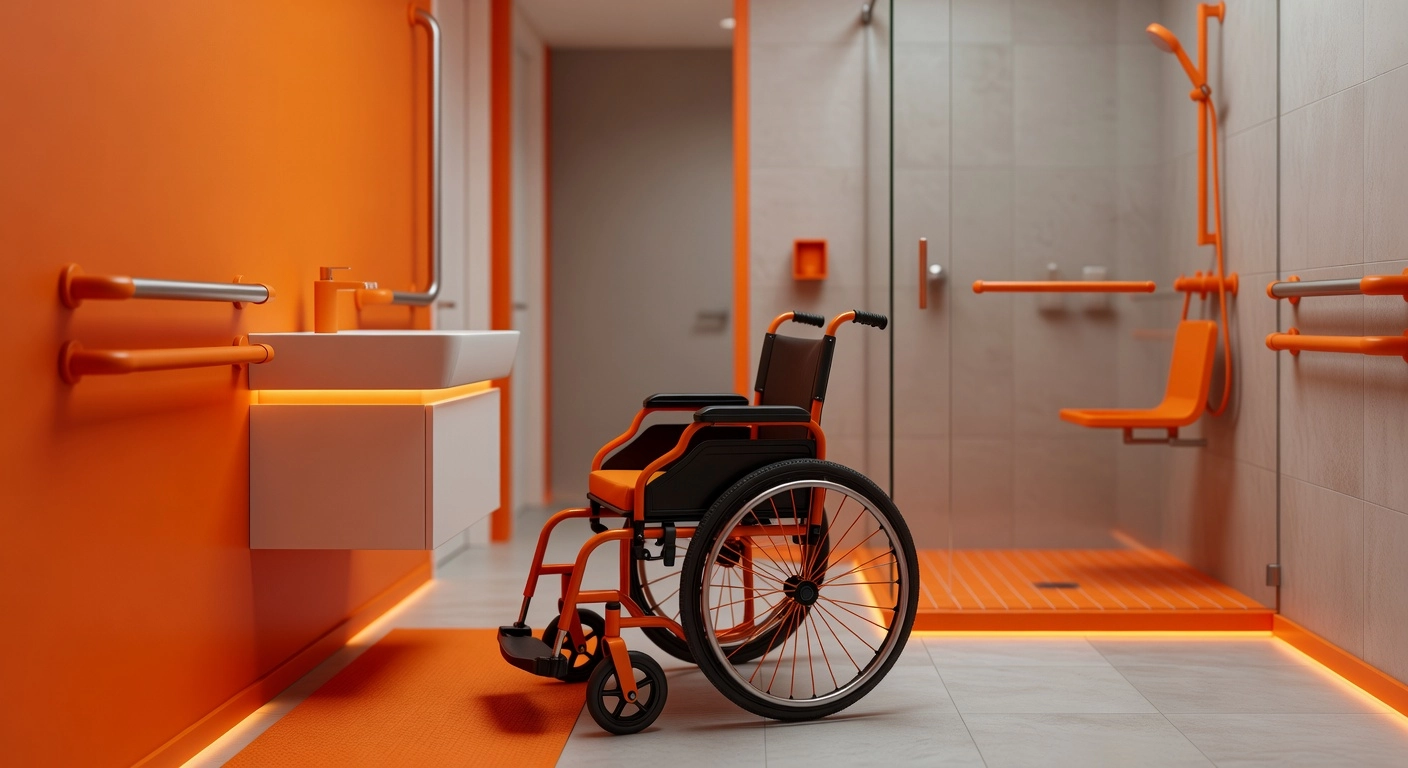
Imagine navigating your daily routine in a bathroom that feels like an obstacle course. For many Australians living with mobility challenges, inaccessible bathrooms lead to frustration, safety risks, and diminished independence. What if you could transform that space into a sanctuary of ease and dignity? This wheelchair accessible bathroom design Australia guide is your authoritative roadmap to making it happen.
As a beginner, you might feel overwhelmed by building codes, fixture choices, and layout options. Fear not. We break it all down into clear, step-by-step instructions tailored for Australian homes. You will learn the essential Australian Standards (AS 1428) requirements, from door widths and turning circles to grab rails and slip-resistant flooring. Discover how to select spacious vanities, roll-in showers with level-entry thresholds, and height-appropriate toilets. We cover budgeting tips, common pitfalls to avoid, and even renovation checklists for DIY enthusiasts or professionals.
By the end, you will have the confidence to design a bathroom that prioritizes safety, functionality, and style. Whether retrofitting an existing space or planning new, this tutorial equips you with expert insights to create lasting accessibility. Let’s build better bathrooms together.
Why Wheelchair Accessible Bathrooms Matter in Australia
Bathrooms are the danger zone in Australian homes, where ~80% of falls happen, often on wet floors or during transfers. One in four Australians aged 65+ falls each year, and while 55.5% of older fall victims modify their bathrooms afterward, 40% of repeat fallers still haven’t, leaving them vulnerable (source: Astrad OT insights). These stats hit hard when you consider ~4.4 million Australians, or 18% of the population, live with disabilities; 64% are in owner-occupied homes that lack basic suitability, fueling NDIS demand as projections show over 600,000 participants by 2026 (AIHW data).
The NDIS steps in with funding for home mods, including 25,274 Specialist Disability Accommodation spots nationally as of March 2024, and 7,295 in Victoria alone, where demand for accessible bathrooms outpaces supply. Wheelchair accessible designs compliant with AS 1428.1:2021 deliver real benefits: slashing fall risks by up to 46% with grab rails and slip-resistant floors, boosting independence for aging-in-place, and restoring dignity for NDIS users and families who want private hygiene without full-time help (AS 1428.1 spotlight).
In Melbourne and surrounds, rising NDIS needs and an aging population mean more renovations for safety. That’s where builders with a Domestic Builder Unlimited licence, like Builda Group with our 10+ years of hands-on experience, step up. We handle NDIS accessibility mods reliably, managing every detail with transparency so you stay independent at home.
Australian Standards and Compliance Essentials
AS 1428.1:2021 forms the backbone of wheelchair accessible bathroom design in Australia, mandating a 1500mm diameter turning circle (or equivalent T-shape), hobless showers with 1160x1100mm clear space, toilet seats at 460-480mm high, and grab rails 30-50mm thick at 800-900mm elevation. These specs ensure safe maneuvering and transfers, integrating seamlessly with the National Construction Code (NCC) 2022, which requires Silver-level livable housing features like reinforced walls for future rails and 900x1200mm toilet clearance zones in new homes. The Livable Housing Design Guidelines build on this for aging-in-place, promoting step-free entries and slip-resistant floors (R10+ rating). For precise layouts, check the AS 1428 Access and Mobility Guide.
Building certifiers inspect and certify new construction compliance under NCC, issuing occupancy permits, while occupational therapists (OTs) assess modifications like NDIS projects, tailoring beyond standards. OTs adjust for user transfers by aligning toilet heights to wheelchairs, enhance balance with dual rails and 1:60 drainage gradients, and address specifics like lever taps for weak grips or carer access.
NCC updates by 2026 will strengthen universal design, future-proofing against Australia’s 4.4 million with disabilities. In Victoria, Builda Group’s Domestic Builder Unlimited licence guarantees full adherence across Melbourne and surrounds, from NDIS upgrades to renovations. Start with an OT assessment for personalized plans. See AS 1428.1 compliance details.
Key Space Requirements for Manoeuvring
Wheelchair users need precise space to manoeuvre safely, as outlined in AS 1428.1:2021 and the National Construction Code (NCC) Part F4. Start with turning space: provide a clear 1500mm diameter circle, or a 1500x1500mm square minimum, expanding to a 2330x2300mm rectangle in full compartments to allow 360-degree turns without fixtures encroaching. This prevents tight squeezes that cause accidents.
Doors demand at least 850mm clear width, with 900mm ideal for easier entry; pair this with zero thresholds to avoid trips. Outward-swinging or sliding doors work best when front clearance is tight.
For toilets, ensure 900-1100mm clearance front and rear from the pan edge, plus 900mm on the transfer side for side approaches. A 460-480mm seat height supports safe transfers.
Shower zones require a curbless 1160x1100mm area minimum, with a 1:60-1:80 floor gradient for drainage.
Tie it all together with continuous level surfaces across the room, around 1900-2330mm wide by 2300mm deep, enabling seamless paths. In our Melbourne NDIS modifications, these layouts have delivered reliable independence. Check the AS1428.1 compliance guide for diagrams.
Toilet and Shower Design Specifications
Toilet Specifications
The toilet in a wheelchair accessible bathroom must have a seat height of 460-480mm above finished floor level, matching standard wheelchair heights for safe, independent transfers as per AS 1428.1:2021. Grab rails are critical: use 30-50mm diameter for a secure grip, positioned at 800-810mm high, with a 40-60mm gap from the wall to prevent hand pinching during use. These rails must be load-rated to 1100N, ensuring they hold firm under stress without bending or pulling away. Rear and side configurations, often L-shaped on the transfer side, provide full support. In our NDIS modifications across Melbourne, we’ve seen these specs reduce transfer risks significantly, especially for users with limited upper body strength. Always verify compliance through an access consultant for certification.
Shower Specifications
Opt for a stepless entry shower compartment, at least 1500x1500mm clear, with a floor gradient of 1:60 to 1:80 for effective drainage without excessive slip hazard. Install a fold-down seat at 460-480mm height, aligning with toilet transfers, and position the handheld mixer tap at 800-1000mm reachable from seated or standing. Grab rails mirror toilet specs around the seat for balance during washing. This setup complies with NCC Part F4 and supports daily independence.
Essential Safety Additions
Fit lever handles on all doors, taps, and controls for one-handed operation, avoiding twisting motions. Choose non-slip floors and tiles rated R10+ on wet pendulum tests, escalating to R11-12 in high-risk shower zones, per AS 4586 slip resistance guidelines. Add emergency call buttons at 1000-1100mm height, reachable from floor level, toilet, and shower, linked to 24/7 response. These elements, drawn from accessible toilet standards, future-proof your space under Livable Housing Design. As Builda Group’s director with 10+ years handling Domestic Builder Unlimited projects in Melbourne’s north and surrounds, I insist on these for reliability.
Vanity, Floors, Walls, and Additional Elements
Vanity
In wheelchair accessible bathroom design in Australia, the vanity must comply with AS 1428.1:2021, featuring a rim height of 800-830mm from finished floor level for comfortable seated reach. Build in a knee or foot recess underneath, at least 700mm high by 800mm wide and 500mm deep, so users can pull their wheelchair right up without obstruction. Choose wall-hung or pedestal models to maximize clear floor space; avoid bulky cabinets. Install lever-handle or sensor taps with thermostatic mixing valves capped at 45°C to eliminate scald risks and ease operation for limited grip strength. As licensed builders with a Domestic Builder Unlimited licence handling NDIS modifications across Melbourne and surrounds, we’ve seen these specs transform routines.
Mirrors, Floors, Walls, and Smart Tech
Position mirrors with the viewing center at 1000-1100mm for seated eye level, extending full height for versatility; tiltable LED models add modern appeal. Floors demand slip-resistant finishes rated R11+ wet pendulum per AS 4586, with continuous, level surfaces and 1:60 drainage gradients to prevent slips, where 80% of home falls occur. Walls need reinforced blocking for grab rails and high-contrast, seamless tiles. Integrate smart tech like adjustable-height benches and thermostatic mixers for multi-user homes. For dignity, involve an occupational therapist early to tailor elements like textured finishes, ensuring function without a clinical look. See detailed AS 1428.1 guidelines.
2026 Trends in Accessible Bathroom Design
Stylish Universal Design
Wheelchair accessible bathroom design in Australia heads into 2026 with universal aesthetics that hide functionality in plain sight. Matte black or brushed brass grab rails, 32-40mm in diameter and 110kg load-rated, double as towel holders while complying with AS 1428.1:2021. Pair them with large-format natural-stone tiles in earthy tones like travertine or olive green for slip resistance (P3+ rating) and spa-like curbless showers at least 1160x1000mm with 1:60 gradients. These choices boost resale value by 15%, as 70% of renovations now include hobless entries. Beginners can start by selecting fixtures from suppliers like RBA Grab Rails that blend seamlessly.
Smart and Sustainable Integration
Sensor taps with LED indicators and voice-activated controls join thermostatic anti-scald mixers limited to 45-50°C, adopted in 40% of Melbourne retrofits. Recycled tiles from post-consumer waste cut grout lines for easy cleaning, while wellness lighting (300 lux layered LEDs) and aromatherapy niches promote calm. Underfloor heating slashes energy use by 20%.
Future-Proofing for Melbourne
With Victoria’s over-65 population hitting 20% by 2030 and 600,000+ NDIS participants, these trends future-proof homes via OT-assessed mods. Builda Group’s Domestic Builder Unlimited licence ensures AS 1428 compliance blends style and safety for aging-in-place. See AIHW aging data for demographics driving demand. Consult us for NDIS projects across Melbourne surrounds.
NDIS Funding, Costs, and Planning
Costs for wheelchair accessible bathroom modifications in Australia typically range from $5,000 to $60,000, depending on the project’s scope, such as minor grab rail additions versus full layout changes with hobless showers and reinforced walls. Occupational therapy (OT) assessments provide the essential guidance, specifying compliant features under AS 1428.1:2021 to match individual needs and ensure NDIS funding eligibility. For example, a basic roll-in shower retrofit might hit $10,000-$20,000, while complex structural work exceeds $30,000 in Melbourne areas.
NDIS Core Supports and Home Care Packages fund these via detailed OT reports, with high approval rates of 80-90% for Specialist Disability Accommodation (SDA) seekers. In Victoria alone, 7,295 NDIS SDA participants (5,293 residing, 2,002 seeking) create strong demand for such mods. See NDIS bathroom modifications guide for detailed funding criteria.
The process starts with an OT home visit for risk evaluation and recommendations. Next, obtain 1-2 quotes from licensed builders like Builda Group, holding a Domestic Builder Unlimited licence. We then manage the approved build transparently. With over 10 years of hands-on experience in NDIS accessibility modifications across Melbourne and surrounds, our director personally oversees every stage for reliability and compliance. This ensures safe, independent use without surprises.
Actionable Takeaways for Your Project
Start with an occupational therapist (OT) assessment to create a personalized wheelchair accessible bathroom plan that complies with AS 1428.1:2021. OTs evaluate individual needs like transfer methods and balance, ensuring features like the 1500mm turning circle and curbless shower fit your mobility and dignity requirements. This step prevents costly redesigns and aligns with NDIS funding approvals.
Next, verify your builder holds a Domestic Builder Unlimited licence and proven NDIS experience. At Builda Group, our Victorian licence covers everything from renovations to full accessibility mods, backed by over 10 years of hands-on work in Melbourne and surrounds. We’ve managed NDIS projects for participants needing safe, compliant spaces.
Budget $5,000 to $60,000 via NDIS or Home Care Packages, based on scope. Prioritize designs slashing bathroom fall risk by 80%, as stats show these areas cause most home incidents. Contact Melbourne specialists like Builda Group for reliable execution; our director personally oversees each project for transparency and results.
Conclusion
This wheelchair accessible bathroom design guide has empowered you with essential knowledge. Key takeaways include strict adherence to Australian Standards AS 1428 for door widths, turning circles, grab rails, and slip-resistant flooring. You now know how to choose spacious vanities, level-entry roll-in showers, and height-appropriate toilets. Plus, practical budgeting tips and checklists help you sidestep common pitfalls during renovations.
These insights deliver real value by turning frustrating spaces into safe, independent sanctuaries tailored for Australian homes.
Take action today: grab our free renovation checklist, consult a certified professional, and start your transformation. Reclaim dignity and ease in daily routines. Your accessible future begins with one confident step.