
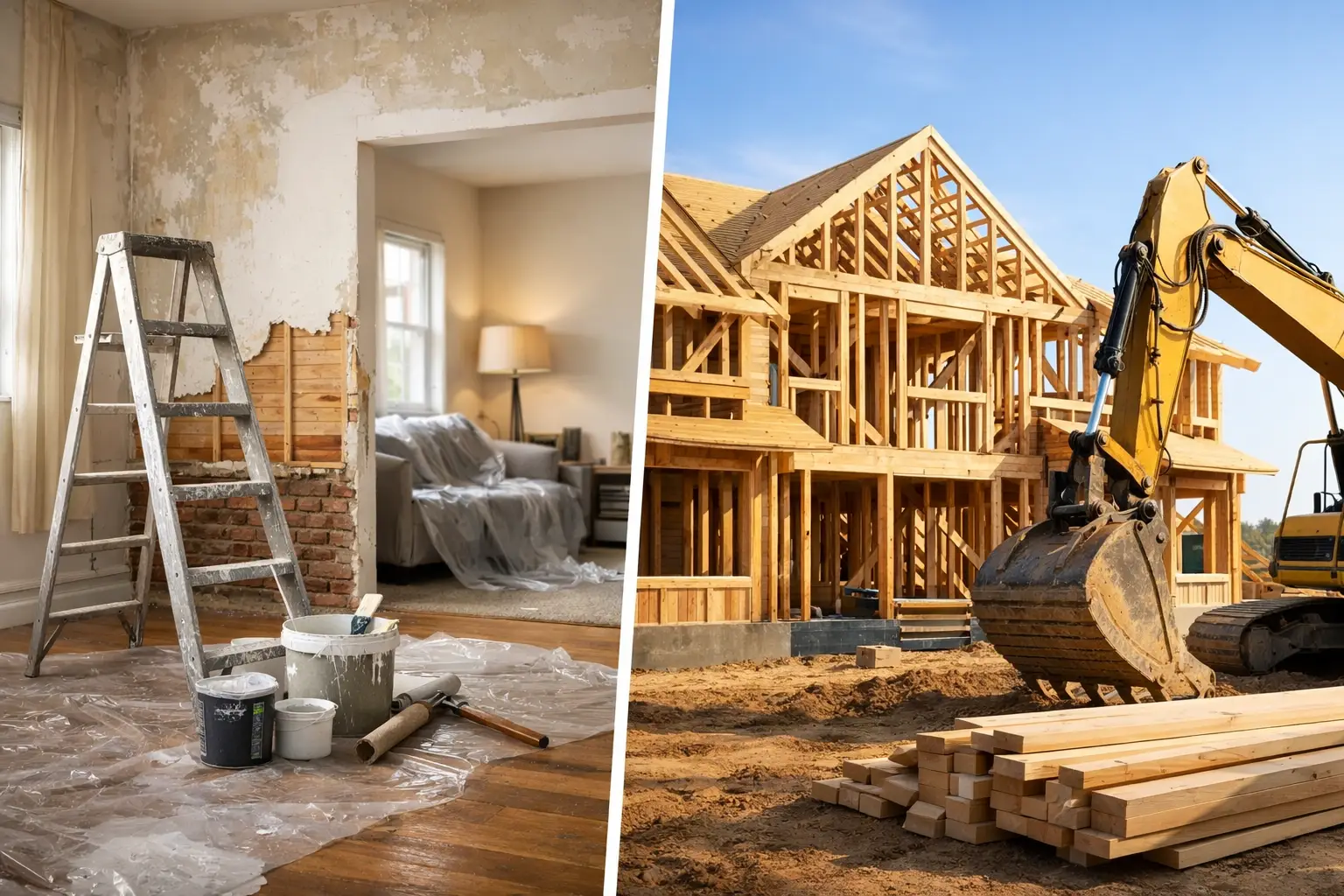
You usually know this decision has arrived before you say it out loud. The floor plan no longer works, the house has been patched too many times, and every trade who walks through points to a different problem hidden behind the walls. A proper renovate or rebuild decision guide starts there – not with wishful thinking, but with the condition of the home, the block, and what you actually need the property to do over the next 10 to 20 years.
For some homes, a renovation is the smart move. For others, rebuilding is the cleaner, safer, and more cost-effective path once you account for structural work, compliance upgrades, and the disruption of trying to modernise a house that was never designed for the way your family lives now. The right answer depends on facts, not sentiment.
How to use this renovate or rebuild decision guide
If you are weighing up a major renovation against a knockdown rebuild, start by separating the emotional side from the building side. People often have strong attachments to a home, a street, or a particular neighbourhood, and that matters. But attachment should not hide serious issues in the structure, services, or layout.
The most reliable way to assess the choice is to look at five areas together: structural condition, design limitations, planning controls, total project cost, and long-term value. Looking at only one of those usually leads to the wrong decision. A cheap renovation quote can become expensive once demolition, rectification, or compliance issues start surfacing. A rebuild can look like a bigger investment upfront, but deliver a far better result in performance, functionality, and resale.
Start with the bones of the house
The first question is simple. Is the existing home worth saving?
If the house has sound foundations, a workable frame, and no major movement, water ingress, or widespread deterioration, renovation can make good sense. That is particularly true where the original structure has character, the footprint suits the site, and the proposed changes are focused on extending, reconfiguring, or upgrading key areas rather than rebuilding most of the house from scratch.
If the home has recurring structural problems, poor waterproofing, roof failures, termite damage, significant cracking, or outdated services throughout, the calculation changes quickly. Once you are replacing large portions of the frame, subfloor, roof structure, plumbing, and electrical anyway, you are no longer doing a straightforward renovation. You are effectively rebuilding in stages, which is often the slower and more expensive way to end up with a compromised result.
This is where disciplined assessment matters. Surface finishes can distract people. Fresh plaster and paint do not tell you much about what is happening in the unseen parts of the building. The real question is whether the shell can support the next stage of investment properly.
When renovation is the better option
Renovation tends to stack up when the existing house already has solid fundamentals and the changes are strategic.
That might mean opening up living areas, adding a new wing, refurbishing wet areas, improving indoor-outdoor flow, or creating more room for a growing family without losing the established position of the home on the block. In some cases, planning constraints also make renovation more practical. If setbacks, overlays, or neighbourhood character controls would make a new home harder to approve, working with the existing structure can preserve value and reduce planning risk.
A well-planned renovation can also be the right move when you want to retain part of the home’s identity. Period homes in established Melbourne suburbs often fall into this category. If the front portion has real architectural value and the structure is sound, extending and modernising behind it can deliver the best of both worlds.
The key is restraint. A renovation works best when the existing building helps the design, not when it fights it at every turn.
When rebuilding is the smarter call
Rebuilding becomes the stronger option when the current house is fundamentally limiting what you need from the site.
That could be because the layout is inefficient, ceiling heights are poor, orientation is wrong, energy performance is weak, or the block could support a far better outcome than the existing home allows. It is also often the right path when the proposed renovation is so extensive that little of the original house remains once the work is complete.
In those cases, a knockdown rebuild gives you a clean slate. You can design for the block properly, improve natural light, fix circulation, bring the home up to current standards from the ground up, and avoid stitching new work onto old construction with all the usual junction issues that come with it. Waterproofing details, structural bracing, insulation, flashing, and service runs are all easier to execute correctly in a new build than in a heavily altered existing home.
That matters more than many clients realise. A house should not just look new when handover happens. It should perform properly for years after. Rebuilding often gives better certainty around that outcome.
Cost is not just the contract sum
One of the biggest mistakes in this decision is comparing headline numbers without comparing scope.
A renovation quote may appear lower than a rebuild quote, but that does not mean the project will cost less by completion. Renovations carry more unknowns. Once demolition starts, concealed defects are uncovered, existing levels do not align, old materials need replacement, and services need to be upgraded to meet current requirements. Variations and delays are more common because the builder is working around conditions that are only partly visible at the start.
A rebuild is usually more predictable if the documentation is strong and the scope is clear. There is still site risk, as there is on any project, but fewer hidden building surprises once the old dwelling is removed. For clients who value fixed-price clarity and disciplined execution, that distinction matters.
You also need to think beyond the build cost. Consider temporary accommodation, holding costs, planning timeframes, demolition, landscaping, and how long the finished solution will remain fit for purpose. Spending less now can be expensive if the end result still falls short in layout, storage, thermal comfort, or future adaptability.
Planning controls and site conditions can decide it for you
Not every block offers the same level of freedom. Overlays, easements, bushfire provisions, flood considerations, neighbourhood character requirements, and local council controls can all affect whether renovation or rebuild is more practical.
A corner site, a sloping block, or a site with access constraints may favour one option over the other. The same applies if you are considering dual occupancy. In many cases, the highest-value solution is not trying to force more from an outdated dwelling, but rethinking the entire site strategy.
This is why early design and planning advice is critical. Before committing to either path, you need to know what can actually be approved, how the site can be built efficiently, and whether the block justifies a more ambitious outcome.
Lifestyle disruption is real
People often focus on the building works and underestimate the living impact.
A major renovation can be more disruptive than a rebuild because it is rarely neat. Parts of the home may remain occupied while trades move through active living zones, services are interrupted, and dust and noise carry on for months. If the project is staged, the timeline can stretch further than expected.
A rebuild is disruptive in a different way. You move out, the house comes down, and the site starts again. That can feel more decisive, and for many families it is easier to manage because the process is cleaner. You are not trying to live inside an active construction zone or make old and new sections function together halfway through the job.
There is no universal rule here. But if you need certainty, a defined construction sequence, and a home that works properly when complete, rebuilding often creates fewer compromises.
The long-term view matters most
A home project at this scale should be judged by how it performs over time.
Ask yourself what you want the property to achieve. Is this your long-term family home? Are you trying to maximise value on a strong block? Do you need flexibility for teenagers, ageing parents, or future resale? If the answer points to a substantially different house than the one currently standing, rebuilding is usually the more disciplined choice.
If the existing home already has strong fundamentals and only needs targeted transformation, renovation can absolutely deliver a premium result. But if you are forcing a tired structure to become something it was never meant to be, rebuilding is often the more honest answer.
The best projects begin with a clear-eyed assessment, not a hopeful one. Good building decisions come from understanding the structure, the site, the rules, and the standard you want to live with once the work is done. If you approach the choice that way, the right path usually becomes obvious.