
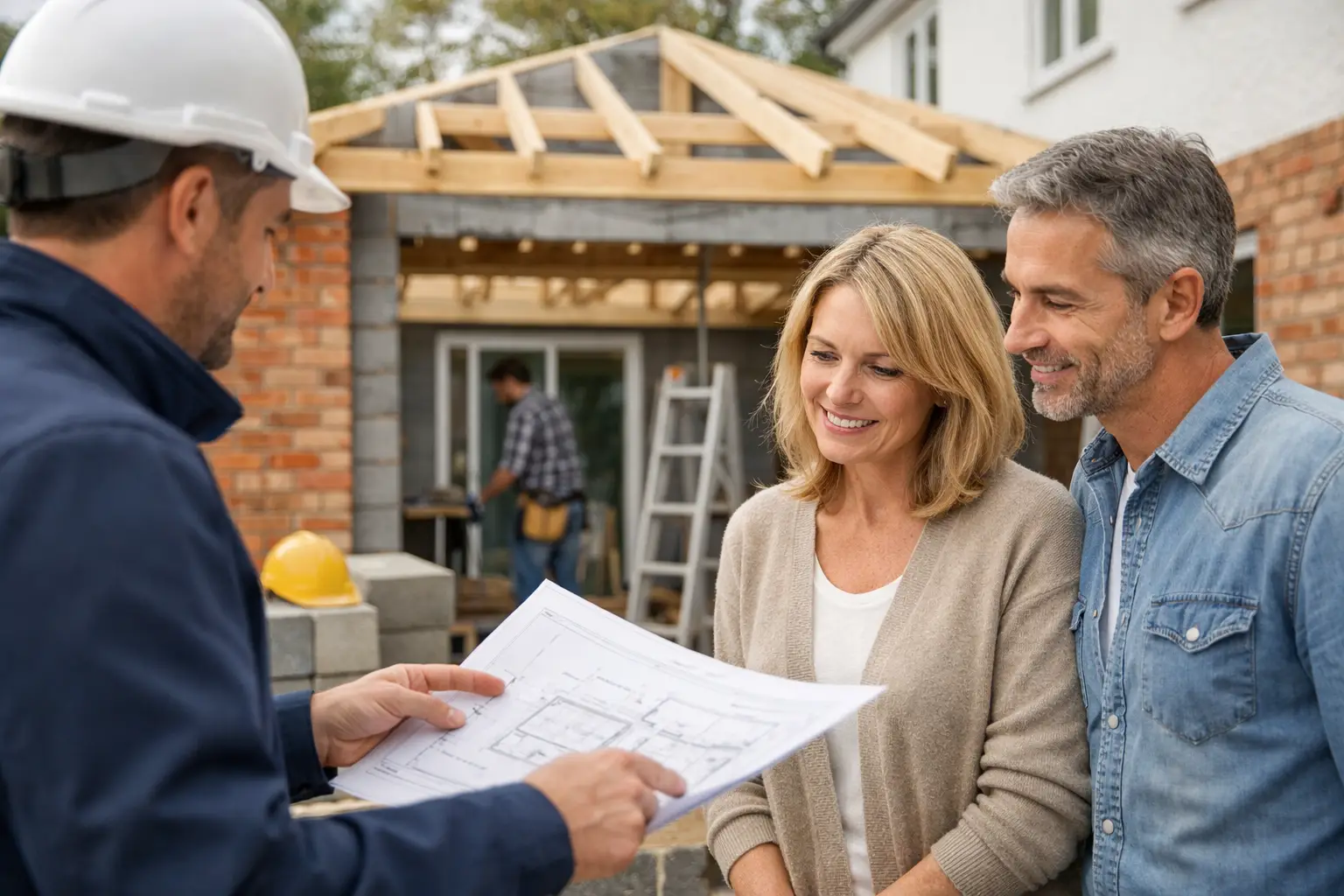
A house extension builder can make your home work better – or turn a promising idea into months of cost overruns, site delays and patch-up work. That is the reality of extending an existing home. Unlike a new build on a clear block, an extension has to tie into ageing structure, hidden services, planning controls and the way your family actually lives day to day.
That is why the builder matters as much as the design. A good extension is not just about adding square metres. It is about making the new work properly with the old, structurally, visually and practically, without cutting corners in the parts you cannot see once the plaster is up.
What a house extension builder actually does
A true house extension builder does more than price a set of plans and book trades. They assess the existing home, identify likely structural and compliance issues early, coordinate engineering and permits, and manage the build so the extension integrates cleanly with the original dwelling.
In Victoria, that process often starts well before construction. Site constraints, overlays, easements, setbacks and council requirements can all affect what is possible. If the home is older, there may be issues with footings, drainage, framing or previous renovation work that does not meet current expectations. An experienced builder knows where problems are likely to sit and how to account for them before they become expensive surprises.
That practical thinking matters. On extension projects, the cheapest quote is often cheap because key items have not been properly considered.
Why extensions are more complex than they look
From the street, a rear extension can look straightforward. On site, it rarely is. Existing walls may not be plumb. Floor levels can be out. Roof lines may need to be reworked to suit drainage and flashing. Services such as sewer, stormwater and power may run straight through the proposed build area.
Then there is the question of how the old and new meet. This is where build quality shows. If waterproofing, articulation, structural connections and weatherproof detailing are not handled properly, the defects do not always appear on handover day. They show up later as movement, leaks, cracking and premature wear.
A disciplined builder will be upfront about these risks. Not to alarm you, but to price and plan the job honestly. Homeowners are usually far better served by clear advice at the start than vague assurances followed by variations once demolition begins.
How to assess a house extension builder
The first thing to look for is relevant experience. Not general building experience, and not just new home construction. Extensions require a different mindset. The builder needs to understand staging, temporary weather protection, structural tie-ins, partial demolition and the realities of working around an occupied home.
You should also look closely at how they manage the project. Ask who is responsible from pre-construction through to handover. If the person who wins the job disappears once contracts are signed, communication often suffers. On more involved residential work, direct oversight and disciplined site management make a real difference.
Pricing is another giveaway. Fixed-price contracts can offer clarity, but only when the scope is properly defined. If the documentation is thin, a fixed price may still leave too much room for exclusions and later claims. A sound proposal should explain what is included, what assumptions have been made and where unknowns may still sit.
It is also worth asking how quality is checked during the build. Stage-by-stage inspections, documented progress and licensed, insured trades are not marketing extras. They are signs of a builder who takes accountability seriously.
The questions worth asking before you sign
A worthwhile conversation with a builder goes beyond finishes and timelines. Ask how they assess the existing structure before final pricing. Ask what happens if demolition reveals defective framing, poor drainage or non-compliant past works. Ask how they handle permits, engineering coordination and variations.
You should also ask about the unseen elements. How are waterproofing details managed around wet areas and external junctions? How is roof drainage resolved where the new extension meets the existing house? What bracing or structural strengthening may be needed to support openings or altered load paths?
If the answers stay at surface level, that tells you something. The right builder will be able to speak clearly about these details because they know that long-term performance depends on them.
Price matters, but so does what the price is built on
Every homeowner has a budget. That is reasonable. But with an extension, value is rarely found in the lowest number. It is found in accurate scope, sound construction and fewer unpleasant surprises once work begins.
There is always a trade-off to manage. A builder who spends time investigating the site, reviewing engineering and clarifying documentation may not produce the fastest quote. They are often the one giving you the more realistic figure. A rushed estimate can look attractive until provisional sums grow, excluded items reappear and delays start chewing into both money and patience.
This is especially true on larger extensions, second-storey additions and projects involving significant internal reconfiguration. Once you open up an existing house, unknowns increase. Good builders account for that risk with process and planning, not optimism.
Design, permits and buildability need to line up
One of the most common issues on extension projects is a disconnect between design intent and build reality. A plan can look excellent on paper and still create avoidable cost, structural complexity or construction delays if buildability has not been properly considered.
That is why early builder involvement can be valuable. A builder with extension experience can flag practical issues before documentation is locked in. That might include roof forms that complicate drainage, oversized openings that require heavier structural steel, or layouts that create unnecessary disruption to the existing home.
For homeowners in Melbourne and across Victoria, planning and building approvals also need careful handling. Depending on the site and scope, council requirements may influence siting, overlooking, neighbourhood character and private open space. The right builder does not treat these as side issues. They are part of delivering the project properly.
Living through the build or moving out
This is one area where the honest answer is: it depends. Some rear and side extensions can be staged so you stay in the home for part of the build. Others become inefficient, disruptive or unsafe if the house remains occupied.
A good builder will not simply tell you what you want to hear. They will explain the likely impact on access, power, water, dust, security and day-to-day living. In some cases, staying put saves money. In others, the disruption drags out the program and creates more stress than it is worth.
Clarity here matters for families, especially when the extension involves kitchens, bathrooms or major structural work through the centre of the house.
What quality looks like on an extension site
Quality is not just a neat paint finish or a nice benchtop line. On an extension, quality starts much earlier. It shows in set-out accuracy, correct structural installation, compliant waterproofing, careful flashing, straight framing and how well the new floor levels, cornices, skirtings and roof lines resolve against the existing house.
It also shows in supervision. Well-run sites do not happen by accident. They rely on scheduling, trade coordination, material planning and consistent checks at each stage. When builders are sloppy in process, defects usually follow.
This is where a trade-led approach stands apart from a volume mindset. The aim is not to move jobs through as quickly as possible. It is to build something that performs properly years after handover. That is the standard serious homeowners should expect.
Choosing for the long term
The best house extension builder for your project is not the one with the smoothest pitch. It is the one who can explain the work clearly, price it honestly, manage it with discipline and build it with care where it counts.
If you are investing in a substantial extension, you are not just buying more room. You are changing how your home functions, how it holds value and how it performs over time. That deserves more than a builder who is good at quoting. It deserves one who understands structure, sequencing, compliance and finish as part of the same job.
Builda Group approaches extensions that way – with clear process, fixed-price discipline and a focus on the details that protect the home long after the tools are packed away.
Before you commit, slow the decision down enough to ask better questions. The right builder will respect that, and your future home will show the difference.