
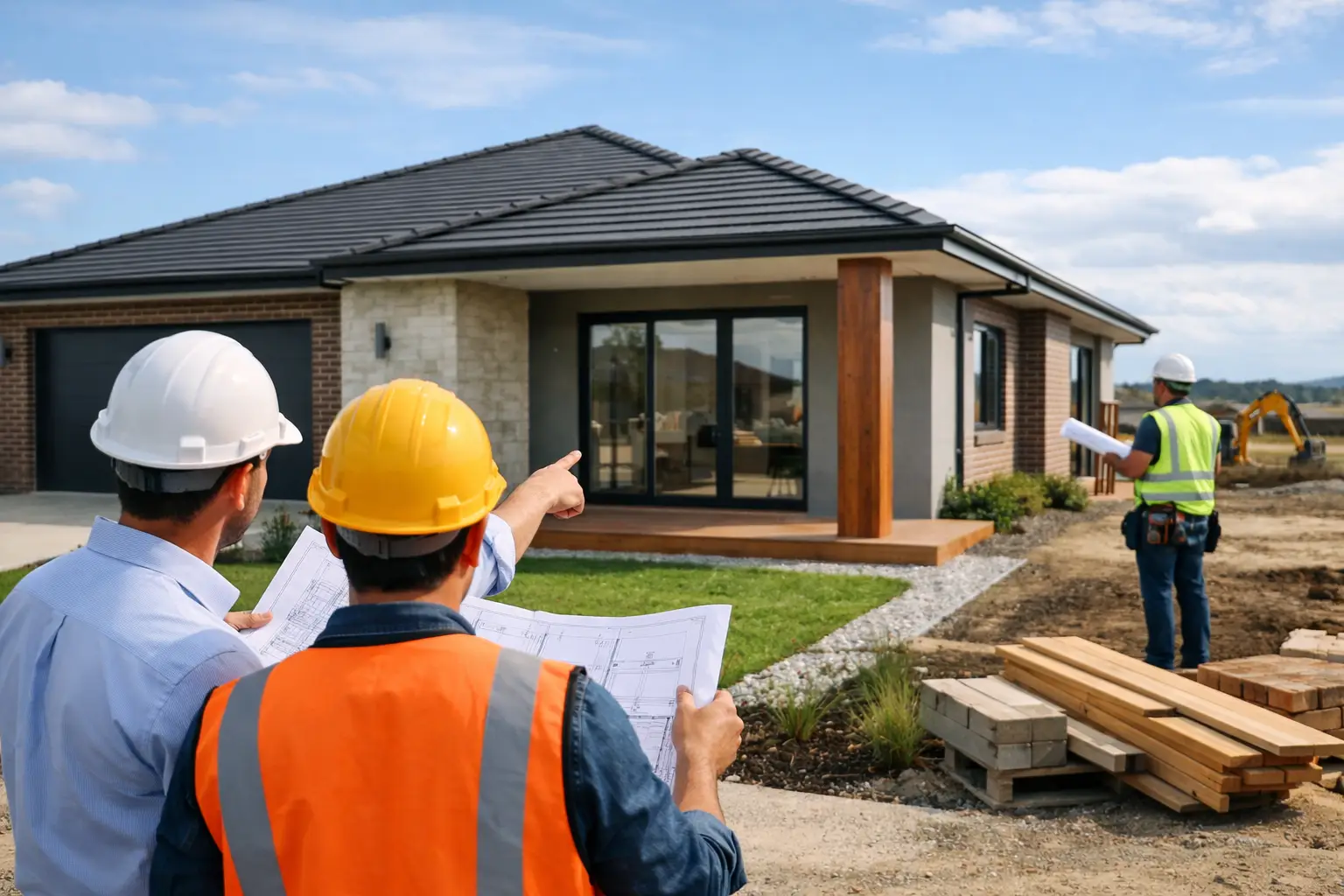
The costly mistakes in a new home rarely announce themselves at handover. They sit behind plaster, below tiles and beneath roof coverings: poor waterproofing, incomplete flashing, inadequate bracing or work that was never properly checked. For homeowners comparing Home Builders in Meadow Heights, Victoria 3048, the real question is not who can produce the most attractive display images. It is who has the process, trade discipline and accountability to build properly from the ground up.
A quality home is the result of hundreds of decisions made well, in the right order. That includes understanding the site before design is finalised, resolving approvals early, documenting the scope clearly and inspecting critical work before it becomes concealed. Whether you are planning a custom home, a knockdown rebuild, a substantial renovation or a dual occupancy project, the builder you choose will shape the outcome long after the paint has dried.
Start with the site, not the floor plan
Meadow Heights offers established residential streets, family-sized blocks and strong reasons for owners to improve rather than move. But an existing home or vacant block can carry constraints that directly affect design, cost and construction timing. A builder who promises a price or start date before investigating those conditions is asking you to accept unnecessary risk.
The first work should be practical. This means reviewing title information, easements, services, access, site levels, existing structures and likely planning requirements. Soil conditions also matter. They influence footing design, slab requirements, drainage and the engineering needed to support the home. These items are not paperwork for paperwork’s sake. They determine what can be built and what it will take to build it correctly.
For a knockdown rebuild, the scope should also account for demolition, service disconnections, asset protection and the condition of neighbouring properties. For an extension, the builder needs to understand how the new structure will connect to the old one, including drainage, roof lines, floor levels and any hidden issues uncovered once work begins. A disciplined pre-construction process helps identify these matters before they become expensive variations on site.
What to expect from home builders in Meadow Heights, Victoria 3048
The right builder should be able to explain their process in plain language. You should know what happens first, what information is required before a fixed price can be issued, who manages consultants and permits, and when decisions need to be made. Vague assurances are not enough when you are committing to a major investment.
A well-managed residential build generally moves through several connected stages: initial feasibility, design development, engineering and documentation, permits, contract finalisation, construction, inspections, handover and post-handover support. The exact sequence can change depending on whether the project needs planning approval, involves an architect or includes a complex subdivision. The principle does not change: decisions must be documented before work starts.
Ask a prospective builder how they manage the details that are easy to overlook. Who checks waterproofing before tiles are laid? How are roof penetrations and flashing inspected? What records are kept at each stage? How are structural changes approved? A premium result is not created by selecting expensive finishes alone. It depends on careful workmanship in the parts of the home you will never see.
Fixed pricing needs a properly defined scope
Homeowners rightly want price certainty. However, a fixed-price contract is only as reliable as the drawings, specifications and site information behind it. If allowances are broad, selections are incomplete or site conditions have not been investigated, a low initial figure can become an expensive problem later.
A transparent builder will take the time to define inclusions and exclusions before presenting a contract. That should cover the construction work, specified materials, appliances and fittings, engineering requirements, permit responsibilities and any provisional amounts that cannot yet be confirmed. Where an allowance is necessary, it should be clearly identified rather than hidden in a headline price.
This approach may require more work before signing, but it gives owners a stronger basis for comparing builders. It also reduces the chance of disputes caused by assumptions. If a proposal appears significantly cheaper than others, look closely at what has been omitted, allowed for or deferred. In building, the cheapest quote is often simply the least complete one.
Build quality is measured before the finishes go on
A polished kitchen and neat façade are easy to photograph. They are not the full measure of a home’s quality. The work that protects the structure and keeps the home performing over time requires more scrutiny.
Framing must be installed in accordance with engineering and relevant standards. Waterproofing needs to be prepared and applied correctly before tiling conceals it. Roof plumbing, flashings and wall junctions need to direct water away from the structure. Insulation, ventilation and sealing details influence comfort, energy performance and condensation risk. These are connected systems, not separate trades working in isolation.
This is why documented, stage-by-stage inspections matter. They create opportunities to identify issues when they can still be rectified properly, rather than relying on a final walk-through to reveal defects. A builder should use licensed, insured and appropriately qualified trades, but trade credentials alone do not replace active site supervision. Someone needs to own the standard from excavation through to final clean.
Choose a builder with clear lines of responsibility
Residential construction involves designers, engineers, surveyors, certifiers, suppliers, trades and sometimes planning consultants. Without strong coordination, the owner can end up chasing answers between multiple parties. That is not how a professionally managed build should feel.
An end-to-end builder provides a clear point of responsibility. They coordinate the information, sequence the works, communicate decisions and manage issues as they arise. That does not mean there will never be a site condition or supply challenge. Construction has variables. It means problems are addressed early, explained honestly and resolved through an agreed process.
Communication should be regular and useful. Owners need to know what has been completed, what is coming next, whether a decision is required and how any approved change affects cost or timing. The strongest builder-client relationships are not built on pretending everything is simple. They are built on clear expectations and straight answers when conditions change.
Match the builder to the type of project
Not every builder is suited to every project. Volume builders may be appropriate for a standardised new home on a straightforward site, particularly where design flexibility is limited and speed is the main priority. A custom home, major renovation or architect-led build requires a different level of coordination and technical attention.
Knockdown rebuilds demand careful early planning because demolition, services, site access and new construction must all be managed as one programme. Major renovations require experience working around existing structures and identifying risks before walls or floors are opened. Dual occupancy projects add further layers, including design efficiency, planning pathways, servicing, titles and build sequencing.
Builda Group approaches these projects as construction work first: properly scoped, properly documented and carefully supervised. The objective is not to rush clients into a contract. It is to establish a buildable solution that protects the budget, the programme and the finished home’s structural integrity.
Questions worth asking before you sign
Before appointing a builder, ask to see how they document their scope and manage inspections. Clarify who will supervise the work day to day, how often you will receive progress updates and how variations are handled. You should also understand the warranty position, the structural guarantee offered and the process for addressing defects after handover.
It is sensible to ask about current projects similar to yours, but look beyond the finished photographs. Ask how the builder dealt with site constraints, planning requirements or changes discovered during construction. Their answer will tell you more about their capability than a brochure ever will.
Your home should be enjoyable to live in, but it also needs to remain dry, sound and dependable through Melbourne’s changing seasons. Select a builder that is prepared to do the detailed work before construction begins, inspect the work that disappears behind finishes and stand behind the result once the keys are handed over.