
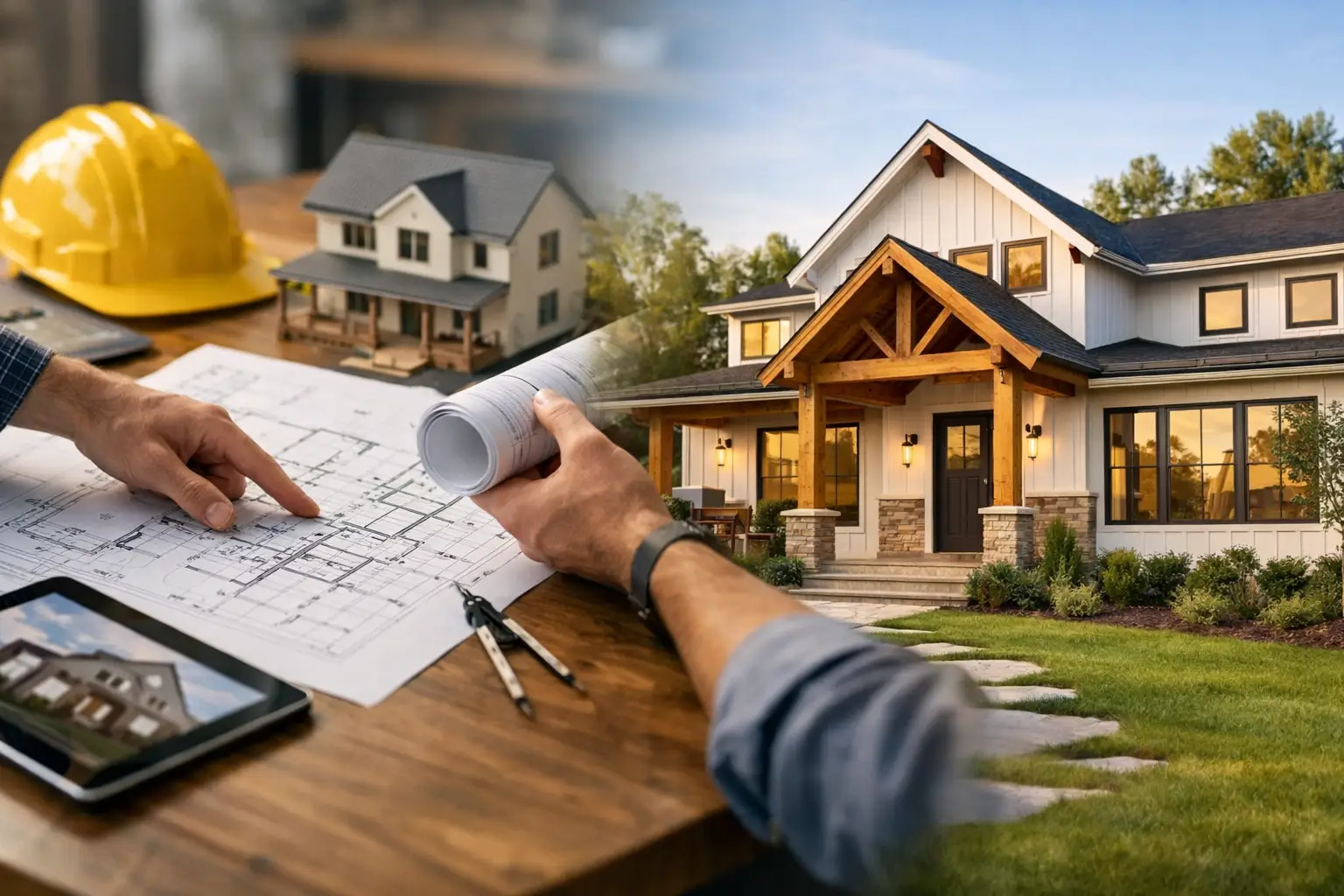
Most custom home problems start long before the slab goes down. They begin when the brief is vague, the budget is unrealistic, or the builder is chosen on display-home polish instead of delivery discipline. If you are researching how to custom build home in Victoria, the real task is not just designing something that looks good on paper. It is building a home that suits your block, your budget, your family, and the planning reality, then executing it properly.
A custom build gives you control that standard project homes cannot. You can shape the layout around how you actually live, respond to the land, improve natural light, and invest where quality matters most. But that flexibility comes with more decisions, more technical coordination, and less room for guesswork. The process works best when it is treated as a structured build programme, not a loose collection of ideas.
How to custom build home without costly false starts
The first step is to get clear on what you are building and why. That sounds obvious, but many owners begin with inspirational images before resolving the fundamentals. How many bedrooms do you need in five to ten years, not just today? Do you want a forever home, a family upgrade, or a site that can support dual occupancy later? Are you prioritising entertaining, privacy, low maintenance, or resale strength?
Those answers shape the design brief. They also affect the build cost more than many people realise. Ceiling heights, structural spans, glazing, façade complexity, retaining, site access, and energy performance targets all influence price. So do hidden conditions on the block, including soil classification, slope, easements, overlays, and existing service connections.
This is why serious custom building starts with due diligence, not assumptions. Before committing to plans that may need reworking, you need a realistic understanding of the site, the council framework, and the cost bracket the project sits in. A disciplined builder will pressure-test the brief early and point out where design ambition and construction reality do not line up.
Start with budget, block and brief together
One of the most common mistakes is treating these as separate decisions. In practice, they are tightly linked. If the budget is fixed, the design must respond to it from day one. If the block is constrained, the layout and engineering need to account for that early. If the brief is non-negotiable, the budget may need to move.
A well-run custom home project usually starts with three working conversations at once. The first is budget range, including contingency, consultant costs, permits, site costs, and selections. The second is site feasibility, which covers planning controls, setbacks, orientation, drainage, crossover requirements, and any demolition or remediation issues. The third is the brief itself, which should be practical and prioritised rather than aspirational and vague.
This is where homeowners benefit from an end-to-end building partner. Instead of chasing separate answers from a designer, estimator, engineer and builder, the project can be assessed as one coordinated process. That reduces redesign, shortens decision cycles, and helps keep the final contract aligned with what was discussed at the start.
Good custom design is not just visual
A custom home should look considered, but visual appeal alone is not enough. The strongest designs work because they solve practical problems. They manage circulation well, place services efficiently, create useful storage, and make structural sense. They also account for the way the home will age over time.
For example, a dramatic roofline or oversized void may look impressive, but it can add significant structural cost and complexity. Full-height glazing can improve light, but only if orientation, shading and thermal performance are handled properly. Open-plan living works well when it is supported by acoustic control, heating and cooling strategy, and sensible room zoning.
That is the difference between design that photographs well and design that lives well.
Choosing the right builder matters more than choosing finishes
Plenty of projects look polished at tender stage and unravel once construction begins. The issue is rarely the benchtop or tile selection. It is usually weak site supervision, poor trade coordination, vague inclusions, or shortcuts in the parts of the build owners do not see.
If you want to understand how to custom build home properly, focus on the builder’s process, not just their portfolio. Ask how the fixed-price scope is prepared. Ask what is excluded and why. Ask who manages permits, site inspections, engineering coordination and trade sequencing. Ask how variations are controlled. Ask what quality checks happen before the plaster goes on and before handover is issued.
A capable custom builder should be able to explain their method clearly. They should also be honest about trade-offs. Sometimes that means recommending a simpler structural solution to protect the budget. Sometimes it means advising against a material that does not suit the site exposure or long-term maintenance expectations. Straight answers early are worth far more than pleasant surprises later.
What to look for in the contract stage
This is where many homeowners either protect themselves or expose themselves. A proper contract should reflect developed documentation, not rough intent. The plans, specifications, engineering details, inclusions and allowances need to be specific enough that pricing is meaningful.
Prime cost items and provisional sums are not always avoidable, but they should be used carefully. Too many allowances can make a contract look competitive while shifting cost risk back onto the owner. A fixed-price contract has real value when the scope has been worked through with discipline and the likely site conditions have been investigated properly.
It is also worth understanding the approval pathway. Depending on the project, you may need planning approval, building permits, demolition permits, asset protection conditions, service applications, energy reports and more. In Victoria, those requirements vary by site and municipality, so a builder who is familiar with council coordination can save substantial time and frustration.
Construction quality is decided in the unseen details
The parts of a home that impress visitors are not usually the parts that determine whether the build lasts. Long-term performance comes from things like framing accuracy, waterproofing, flashing, bracing, slab preparation, drainage falls, membrane installation and compliant penetrations. If those are wrong, expensive finishes will not save the home.
That is why inspection discipline matters. Stage-by-stage checks, documented quality control and licensed, insured trades are not marketing extras. They are part of building properly. A custom home should be executed with the same care behind the walls as it is in the kitchen, bathrooms and façade.
This matters even more in complex builds. Knockdown rebuilds, sloping blocks, architect-designed homes and dual occupancy projects all create more interfaces between design intent and site reality. The more complex the project, the less room there is for loose supervision or informal problem-solving.
Expect decisions during the build
Even with strong documentation, construction is not entirely linear. Site conditions can reveal new information. Certain products can become unavailable. Lead times can affect sequencing. You may also change your mind on selections once spaces start taking shape.
The goal is not to avoid every decision during construction. The goal is to manage those decisions properly, with clear pricing, clear impact on programme, and no confusion about what is changing. A builder who communicates early and documents variations properly protects both the project and the client relationship.
Handover should not feel like the finish line after chaos
A well-managed handover is usually the result of a well-managed project. Defects are addressed before the final rush. Compliance documents are organised. Appliance manuals, certificates and warranties are ready. The owner understands what has been delivered and what post-handover support looks like.
This final stage matters because it tells you a lot about the builder’s standards. If the paperwork is vague, the finish is rushed, or unresolved items are brushed aside, that usually reflects what happened during the build as well. By contrast, a disciplined builder treats handover as a formal completion process, not a scramble to close the file.
For homeowners in Melbourne and regional Victoria, the strongest custom home outcomes usually come from teams that bring design, pricing, approvals and construction together under tight control. That is where firms like Builda Group stand apart – not by making bigger promises, but by building with more rigour, clearer pricing and a sharper focus on the structural details that protect the home long after handover.
If you are planning a custom home, keep your brief grounded, your documentation thorough, and your builder selection focused on execution. A good home starts with good design. A durable one starts with good building discipline.