
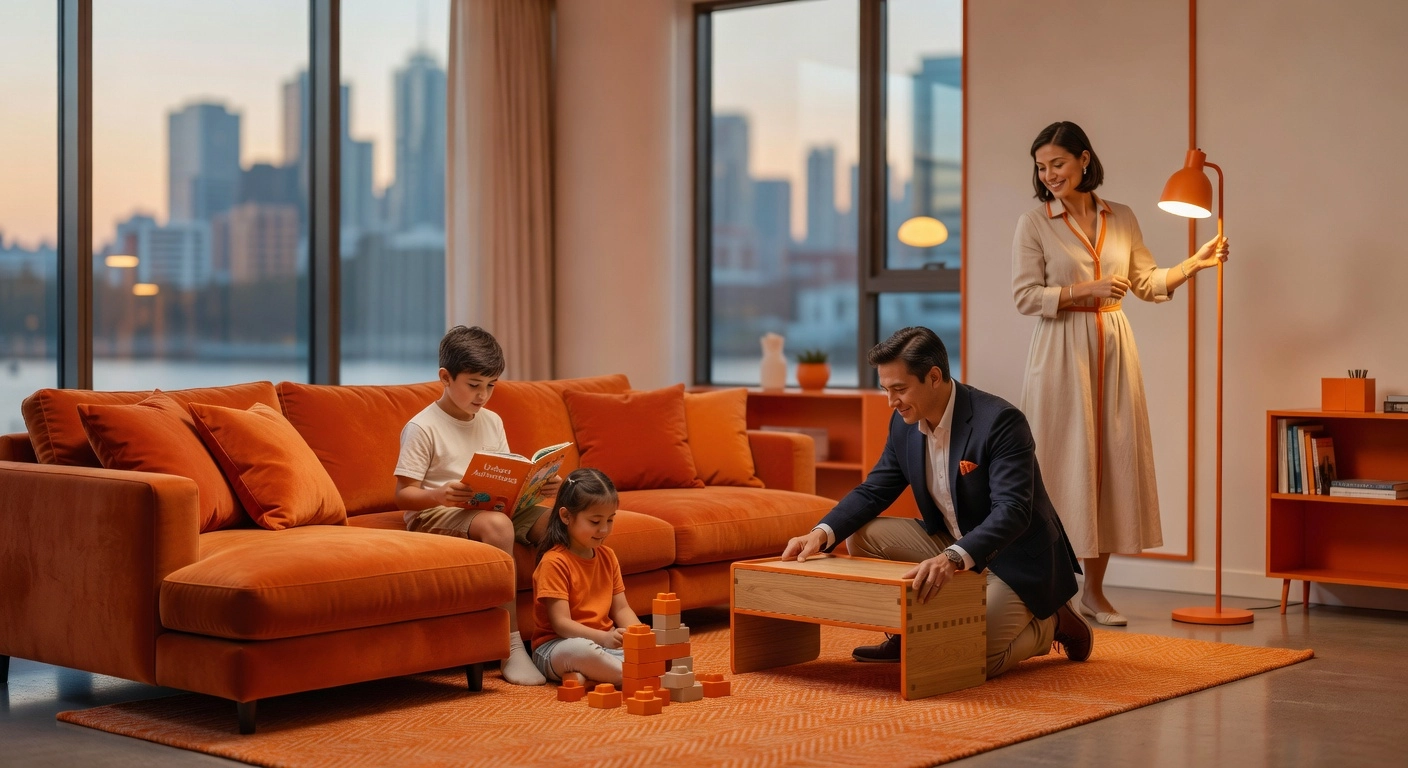
Melbourne’s property market presents unique opportunities for families seeking compact living spaces. As urban density increases, the appeal of a well-designed small family apartment grows stronger each year. These residences offer a practical solution for those balancing space constraints with the desire for a comfortable home environment.
In this analysis, we examine the critical factors that define successful small family apartment living in Melbourne. Readers will gain insights into current market trends, including pricing dynamics and availability across popular suburbs. We also explore design strategies that maximize functionality without sacrificing style. Location considerations receive particular attention, highlighting areas that provide excellent access to schools, parks, and public transport. Furthermore, this piece delves into potential challenges and how to mitigate them effectively. By the end, you will possess a clearer understanding of how to navigate the selection process with confidence and make informed decisions tailored to your family’s needs.
Market Dynamics Shaping Demand
Melbourne apartment completions in the inner precincts fell to just over 2000 units in 2025, marking a 10-year low that has sharply reduced options for families looking for practical medium-density homes. This contraction stems from earlier financing and construction hurdles, leaving a noticeable gap in well-designed 2-3 bedroom stock that suits households with children. The limited pipeline means buyers now face greater competition for existing properties that offer flexible layouts, natural light, and private outdoor space.
Median apartment prices have held steady around $615000, with forecasts pointing to 7.1 to 7.3 percent growth through 2026. At the same time, weekly rents average $575 and vacancy rates remain tight at 1.5 percent, creating a market where well-located units hold their value. These conditions reward properties that balance affordability with everyday livability, such as compact townhouses near schools and transport links.
Victoria added 146700 residents in the year to September 2024, sustaining strong interest in affordable 2-3 bedroom units and townhouses instead of larger detached houses. Much of this growth comes from overseas migration, which concentrates demand in established suburbs where families can access amenities without stretching budgets. As a result, preferences have moved toward boutique low-rise developments that deliver better privacy and outdoor areas than typical high-rise investor stock.
Builders holding a Domestic Builder Unlimited licence and bringing more than 10 years of experience across Melbourne and surrounds are well placed to address the shortfall. Their hands-on approach allows them to manage custom unit developments and accessibility modifications from start to finish, delivering projects that meet current family needs for adaptable, energy-efficient designs. This combination of technical skill and direct oversight helps fill the space left by larger developers focused on volume over tailored outcomes.
Family-Friendly Features in Compact Layouts
Small family apartments with compact 2-3 bedroom layouts succeed when builders prioritise adaptability from the outset. Flexible room configurations let spaces shift as children grow, turning a spare bedroom into a home office or study area today and a bunk room later. Sliding panels or modular furniture keep circulation clear while meeting Victoria’s minimum room dimensions for functional layouts. Families benefit from these choices because they avoid the need to relocate as household needs evolve.
Strong natural light and clear sightlines improve daily supervision without adding floor area. Generous storage built to current standards, such as 10 cubic metres total for two-bedroom units, keeps toys, school supplies and seasonal items organised. These elements address real household routines while complying with the Apartment Design Guidelines for Victoria.
Private outdoor space paired with communal play areas supports family life in medium-density settings. Balconies or ground-level courtyards meeting minimum size rules give children room to play close to home, while shared gardens allow supervised social time. This combination preserves the walkability and amenity advantages of apartment living.
Energy-efficient materials and passive design choices aligned with Victorian guidelines lower running costs over time. North-facing living areas, effective cross-ventilation and appropriate shading reduce heating and cooling demands for growing households. Custom unit developments let these features be integrated during planning rather than added as afterthoughts.
Builda Group brings more than ten years of hands-on experience and a Domestic Builder Unlimited licence to projects across Melbourne and surrounds. We manage every stage of custom residential builds, renovations, extensions and unit developments with transparency. This approach produces family apartments that remain practical and efficient long after completion.
Accessibility Integration for Diverse Households
NDIS accessibility modifications integrate directly into new small family apartments, delivering step-free entries, doorways at least 900 mm wide, and adapted bathrooms that support mobility and daily independence. These features align with current Livable Housing Australia guidelines and the National Construction Code updates, allowing participants to remain in compact family settings without later structural changes. Early planning with occupational therapists ensures modifications match individual needs while preserving room for children and shared living. Renovations and extensions on existing properties create similar outcomes by adding ground-floor accessible spaces or widening corridors during family upgrades. Insurance repair works further support this by folding accessibility improvements into damage restoration, turning older units into compliant homes that serve both families and NDIS participants at modest added effort.
Low-rise townhouse and unit projects across Melbourne’s north show these elements fit neatly into compact footprints under the updated Townhouse and Low-Rise Code. Builders experienced in unit developments and NDIS work coordinate approvals, structural details, and funding in one workflow, cutting delays and simplifying the process for clients. With over 10 years of hands-on delivery and a Domestic Builder Unlimited licence, Builda Group manages every stage across Melbourne and surrounds, from single accessible bathrooms to full multi-unit sites. This integrated approach supports independent living while meeting the practical needs of diverse households in smaller family apartments.
Practical Considerations for Custom Projects
Site selection in Melbourne’s established northern suburbs gives families reliable access to schools, parks and transport links while keeping project footprints practical. These areas already have roads, utilities and community facilities in place, which reduces the need for major new infrastructure and helps control overall build complexity. Local knowledge of soil conditions and drainage patterns further streamlines design decisions for small family apartments.
Planning approvals for low-rise unit developments typically advance more quickly than high-density proposals. Lower building heights attract fewer objections and simpler zoning checks, leaving scope for family-specific adjustments such as extra storage or open living zones. Builders holding a Domestic Builder Unlimited licence can guide clients through these steps with clarity, avoiding the extended review periods common in taller projects.
Coordination between new builds, renovations and accessibility upgrades demands careful sequencing on compact sites. Completing structural work before interior modifications, such as widened doorways or level-entry bathrooms, prevents trade clashes and limits disruption for households. This phased approach proves especially useful when integrating NDIS accessibility modifications into existing family homes or new unit developments.
Multi-generational and downsizing trends continue to shape demand for adaptable layouts. Features like mezzanine levels or convertible rooms allow the same footprint to serve changing household needs without expansion. Recent data shows 17 percent of buyers now seek multigenerational homes, driven by care responsibilities and cost considerations. multigenerational living trends
Transparent project management from an experienced local builder helps families track timelines and compliance requirements. With over ten years delivering projects across Melbourne and surrounds, the team at Builda Group maintains open communication on permits, inspections and milestones. This steady oversight reduces surprises and supports smooth progress from design through handover.
Next Steps for Families Exploring Options
Reviewing current market data helps set realistic expectations before committing to a small family apartment project. Median apartment prices in Melbourne sit near $615,000 with forecasts pointing to 7.1 to 7.3 percent growth in 2026, while supply remains constrained and vacancy rates hover around 1.5 percent. Solid rental performance near $575 per week offers families clearer insight into long-term costs and returns.
Identifying priority features such as flexible layouts, private outdoor space and accessibility provisions at the outset ensures these elements shape the design rather than appear as afterthoughts. Early focus on adaptable rooms and step-free access supports everyday family routines and potential NDIS needs.
Consider working with a licensed builder who handles unit developments, renovations and NDIS modifications to coordinate approvals and delivery across Melbourne and surrounds. A Domestic Builder Unlimited licence adds assurance that the team can manage compliance from start to finish. Visiting completed low-rise projects in the northern suburbs shows how compact designs actually perform for daily living. Starting discussions with an experienced team early allows site feasibility checks and guidance tailored to your household.
Conclusion
Small family apartments in Melbourne deliver practical benefits for urban households. Key takeaways include monitoring current pricing trends and availability in family-oriented suburbs, applying smart design approaches that boost both function and visual appeal, selecting locations with strong access to schools, parks, and transport links, and preparing solutions for everyday challenges such as limited storage. This overview gives you the tools to evaluate options with greater confidence and clarity. Begin your search today by reviewing current listings in target neighborhoods or speaking with a local agent who understands family needs. Thoughtful planning turns these compact spaces into comfortable homes where daily life flows smoothly and future memories are built.