
For many Australians who use wheelchairs, accessing a shower safely and independently remains a daily hurdle that impacts quality of life. Traditional bathroom setups often fail to accommodate mobility needs, leading homeowners and caregivers to seek practical modifications. Among the available solutions, shower ramps for wheelchairs australia stand out as a common choice for bridging height differences at shower entrances. Yet these ramps represent just one option in a broader landscape of accessibility enhancements.
This comparison examines shower ramps alongside alternatives such as roll-in showers, modular ramps, and custom-built wet areas. Readers will gain insights into the advantages and limitations of each approach, including factors like installation requirements, durability, compliance with Australian standards, and overall cost-effectiveness. By the end of this discussion, you will understand which solutions best suit various home layouts and user requirements, empowering you to select modifications that promote safety and independence without unnecessary expense.
Understanding Shower Ramps for Wheelchair Access
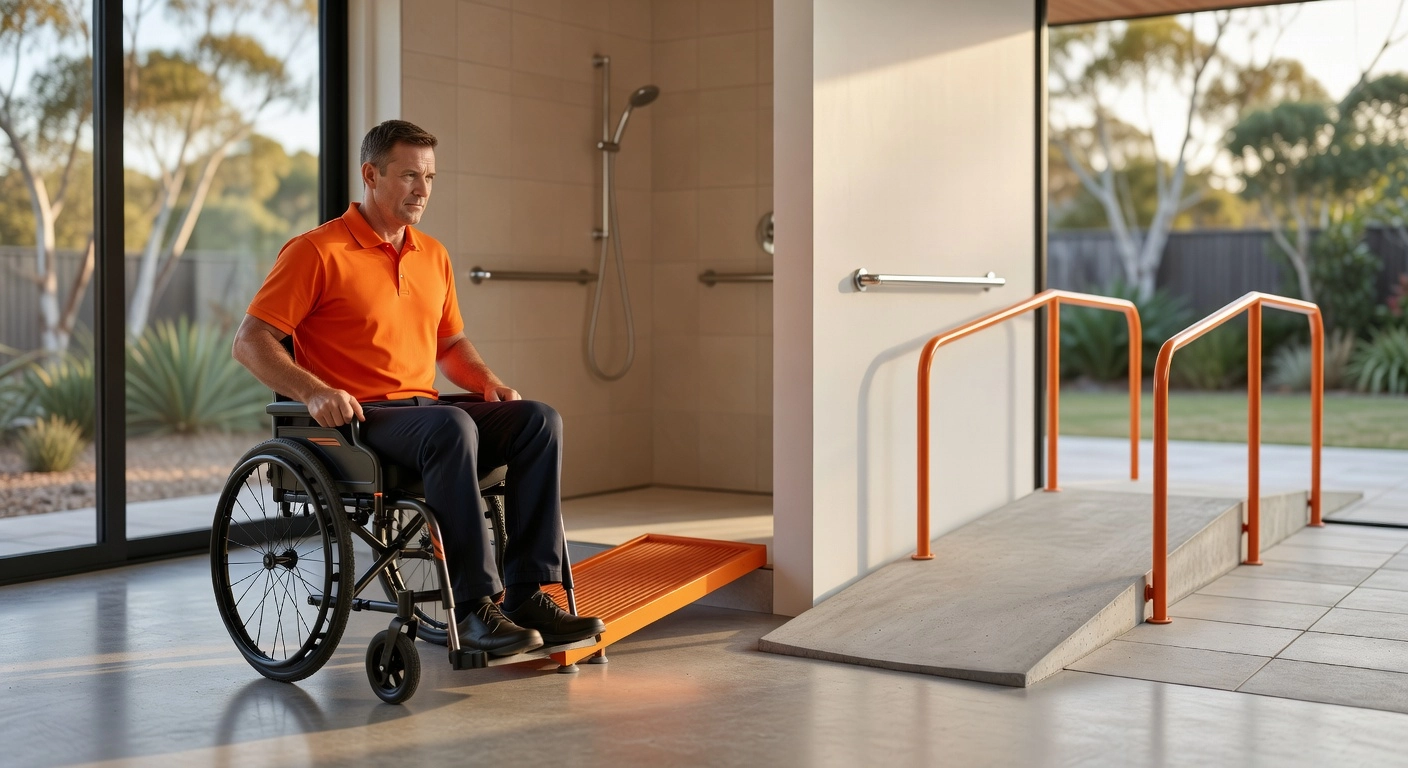
Shower ramps serve as a straightforward alternative to major bathroom renovations when improving wheelchair access in wet areas. These low profile recycled rubber inserts sit within existing shower recesses and eliminate the raised hob or threshold that creates a barrier. Homeowners and NDIS participants gain level entry without the need to remove tiles, adjust floor gradients, or undertake structural demolition. Compared with full hob removal projects that demand weeks of work and significant dust and disruption, shower ramps deliver functional access in a fraction of the time while leaving the original bathroom layout intact.
This method supports compliance with Australian Standards AS 1428.1 for safe navigation by wheelchairs and other mobility aids. The ramps provide stable, gradual transitions that reduce trip hazards and allow smooth movement across the bathroom floor into the shower. In practice, they help meet recommended circulation spaces and gradient requirements without forcing a complete redesign of the wet zone. Builders with a Domestic Builder Unlimited licence often recommend them during NDIS accessibility modifications because they achieve reliable results with minimal intervention.
Several design elements make these ramps suitable for Australian bathroom conditions. Non slip surfaces rated for wet environments reduce fall risks for users and carers alike. Tapered edges on both sides prevent abrupt changes that could catch wheels or feet, while the water resistant recycled rubber material withstands humidity, temperature shifts, and constant moisture exposure. In retrofit situations, the same features perform well in new residential builds where early planning allows seamless integration with reinforced walls and grab rails.
NDIS funded projects frequently specify shower ramps to overcome wet area barriers quickly and cost effectively. They qualify as minor modifications that occupational therapists can approve without lengthy structural assessments. This approach proves especially useful in rental properties or homes where permanent changes are restricted. With more than ten years of hands on experience managing such works across Melbourne and surrounds, licensed builders can coordinate supply, installation, and compliance checks to ensure the outcome supports daily independence for wheelchair users.
Rubber Shower Ramps Compared to Traditional Hob Removal
Rubber shower ramps offer a practical overlay solution for creating level access in existing showers, while traditional hob removal involves full demolition and reconstruction of the shower base. For homeowners and NDIS participants across Melbourne and surrounds, the choice often comes down to balancing immediate needs with long-term practicality. As a licensed Victorian residential builder with a Domestic Builder Unlimited licence, Builda Group brings over a decade of direct experience to both approaches, ensuring every modification meets regulatory standards without unnecessary complexity.
Upfront costs and ongoing maintenance differ sharply between the two methods. Rubber inserts sit over the existing hob with minimal materials and labour, keeping expenses low and avoiding the need for new waterproofing layers or waste relocation. Maintenance stays simple, limited to occasional wiping with standard cleaners, and these durable recycled rubber pieces hold up well in wet conditions without sealing or repairs. In contrast, hob removal requires extensive demolition, screeding, tiling and plumbing adjustments that drive higher initial outlays and introduce recurring tasks such as re-grouting and mould checks. Over time, the rubber route typically delivers substantial savings while delivering equivalent wheelchair access for most domestic situations.
Installation disruption levels also set the options apart. Rubber ramps require no drilling, tiling or structural alterations, allowing a licensed builder to measure, cut and fit the piece in under an hour with zero dust or loss of shower use. This makes them especially suitable for rentals or quick NDIS-funded upgrades in Melbourne’s older housing stock. Hob removal, however, turns the bathroom into a construction zone for days or weeks, involving heavy demolition, curing times and temporary relocation needs that interrupt daily routines. Many clients prefer the low-impact route when timelines and household continuity matter most.
Both solutions achieve compliance with the National Construction Code and AS 1428.1 when carried out correctly by licensed builders. Proper gradient design and slip-resistant surfaces ensure rubber ramps meet accessibility requirements for domestic use, while a fully rebuilt hobless shower delivers permanent level entry that satisfies the same standards. Occupational therapists and access consultants routinely endorse either path, provided the work is documented and executed to code.
NDIS funding realities in 2026 continue to favour lower-cost, non-structural options amid tighter scrutiny on value for money. Rubber ramps often qualify under minor modifications or assistive technology categories, reducing paperwork and approval times compared with complex structural works that demand detailed reports and permits. This shift encourages participants to achieve functional independence faster without exhausting allocated budgets on demolition.
Longevity and aesthetic fit vary according to household plans. Rubber pieces provide ten to twenty years of service in typical Melbourne bathrooms and can be removed without trace if circumstances change, preserving original flooring in weatherboard or brick-veneer homes. Hob removal creates a seamless, modern flush shower that integrates with full renovations and lasts as long as the surrounding tiles, suiting owners committed to long-term residency. In both cases, working with an experienced local builder ensures the outcome matches the home’s character and the user’s mobility requirements.
Full Level Entry Showers as a Comprehensive Alternative
Full level entry showers deliver a permanent, barrier-free wet area through extensive structural alterations rather than simple overlays. The process begins with complete floor grading to establish reliable drainage, typically at a 1:60 to 1:80 fall toward a central or linear drain, combined with full wet-area waterproofing that meets AS 3740:2021 requirements. Walls receive additional framing or blocking so grab rails can be fixed at compliant heights without later demolition, while the shower zone itself expands to at least 1200 by 1200 millimetres and incorporates slip-resistant surfaces rated P3 or R10. Electrical and plumbing upgrades, door widening to 850 millimetres clear, and integration of fold-down seats or handheld showers on rails complete the scope. In Melbourne properties these works usually span several days to a few weeks depending on site conditions and asbestos checks.
The long-term gains in safety and independence often justify the higher upfront commitment and permit process. Users gain direct wheelchair access without transfers or carer assistance, which reduces fall risks and supports ageing in place. Building permits are required for any floor lowering or waterproofing changes, adding time and documentation, yet the resulting durability lowers ongoing support needs and delivers measurable returns through decreased injury and care hours. Homeowners who choose this route typically report sustained community participation that simpler threshold solutions cannot match over a decade or more.
Suitability differs sharply between new builds and existing Victorian homes. In fresh construction the features integrate from the design stage, satisfying Livable Housing Design Standards and NCC requirements with minimal extra cost. Retrofits in established Melbourne and surrounding properties demand more invasive work, including possible floor lowering, structural strengthening, and temporary relocation of residents. Successful examples in areas such as Sunbury and Heathmont show that careful planning and experienced coordination overcome these constraints when an occupational therapy assessment guides the layout.
These major modifications align directly with NDIS Capital Supports criteria for complex, high-impact changes. Full level-entry showers qualify when they address documented functional needs through structural works exceeding typical equipment thresholds, requiring detailed quotes, plans and permits. In contrast, equipment-style ramp additions remain classified as lower-cost Assistive Technology and receive faster approval when they achieve comparable access at reduced expense. Recent NDIS guidance emphasises value-for-money assessments, making comprehensive occupational therapy reports essential for both pathways. Builders holding a Domestic Builder Unlimited licence can manage the full permit and compliance process across Melbourne projects, ensuring every stage meets Australian Standards while keeping the focus on practical, lasting independence.
NDIS Funding Pathways for Shower Ramps in Victoria
NDIS funding for shower access modifications in Victoria now tilts strongly toward cost-effective options that deliver results without unnecessary structural work. Assessors in 2026 routinely favour rubber or modular threshold ramps over full hob removal because these solutions meet safety standards while cutting costs and approval hurdles. Rubber ramps provide non-slip surfaces, tapered edges, and quick installation that suit existing bathrooms, whereas full renovations demand permits, demolition, and longer coordination. This shift aligns with NDIS emphasis on value for money, especially as participant numbers grow and budgets face tighter review. Builders with direct experience in these projects understand how to present the practical benefits clearly during assessments.
Approval hinges on solid documentation that links the proposed changes to a participant’s specific mobility needs. An occupational therapist report forms the core piece, detailing measurements, risk factors, and how the ramp addresses daily barriers. Itemised quotes from a qualified builder must accompany this report, outlining materials, dimensions, and installation steps without starting any work beforehand. Supporting records such as ownership proof or strata consent complete the package. Incomplete submissions often trigger delays, so thorough preparation at the outset saves time across Melbourne and surrounding suburbs.
A Domestic Builder Unlimited licence stands out as the credential that signals full capability for these projects. This registration allows management of all domestic building elements, including ramps and wet-area adjustments that may require permits. It reflects consistent compliance with Victorian regulations and gives participants confidence that plans will hold up under NDIS scrutiny. Directors who carry this licence bring over a decade of hands-on coordination, ensuring every stage from quote to completion receives personal oversight rather than delegation.
Timelines vary by project scale but follow predictable patterns in the Melbourne region. Minor rubber ramp installations typically secure NDIS approval within four to six weeks once paperwork is complete, followed by swift on-site work. Complex structural options stretch longer due to additional reviews and permits. Early involvement of a support coordinator and registered provider helps sequence assessments, quotes, and installation without gaps. NDIS home modification guidelines outline these steps in detail for anyone preparing an application.
Installation Compliance and Local Requirements
Shower ramps for wheelchair access must meet strict rules under the National Construction Code and AS 1428.1 to deliver safe, durable results in wet areas. Gradients for threshold ramps are limited to a maximum 1:8 slope with no more than 35 mm rise over 280 mm length, while shower floor falls typically range from 1:60 to 1:80 to direct water effectively without pooling. Slip resistance requires minimum P4 or R11 ratings on ramps and transitions when wet, and waterproofing membranes must extend 1500 mm from the shower rose with walls treated to 1800 mm height. These standards apply equally to new builds and renovations, though the practical detailing changes depending on whether the work starts from a bare slab or an existing tiled recess. Non-compliant installations risk failing inspections and losing NDIS funding approval.
In Victoria, permanent modifications to residential properties usually need a building permit under the Building Act 1993. A licensed practitioner prepares compliant plans, then submits them to a building surveyor or council for approval before work begins. Inspections occur at critical stages such as before membrane application and at final completion, culminating in a certificate of final inspection. Builda Group holds a Domestic Builder Unlimited licence, which allows us to manage these steps directly across Melbourne and surrounds without relying on subcontractors for core compliance tasks.
Successful projects depend on clear coordination between builders, occupational therapists, and NDIS planners. Occupational therapists assess functional needs and specify ramp gradients or layouts, while builders translate those requirements into code-compliant construction details and handle permit lodgement. NDIS planners review the combined documentation to confirm the work is reasonable and necessary. Joint site visits early in the process help resolve conflicts between clinical goals and structural constraints before funding is locked in.
Experience across both new construction and renovation work produces more reliable outcomes because the two contexts present different compliance challenges. New builds allow full integration of level thresholds and pre-planned falls from the slab stage, aligning with current Livable Housing Design Standards. Renovations require careful assessment of existing waterproofing, possible asbestos, and limited space for landings, yet demand the same gradient and slip-resistance performance. Builda Group brings over ten years of hands-on work in both settings, managing NDIS accessibility modifications with transparency from initial assessment through final certification.
Conclusion and Practical Next Steps
Weighing rubber shower ramps against full structural modifications reveals straightforward trade-offs. Rubber solutions align with tighter budgets and shorter timelines, providing NDIS-compliant access through simple overlays that avoid demolition, though they may need replacement over extended periods. Structural options deliver lasting results suited to long-term needs but involve longer project durations and greater disruption to household routines.
Start with an occupational therapist assessment to clarify precise requirements, then consult a licensed builder. Melbourne homeowners benefit from verifying credentials such as a Domestic Builder Unlimited licence and reviewing past NDIS modification projects before committing. Request a site inspection and obtain compliant quotes tailored to individual circumstances. Builda Group applies over ten years of direct experience to these projects across Melbourne and surrounds, managing each stage with transparency.