
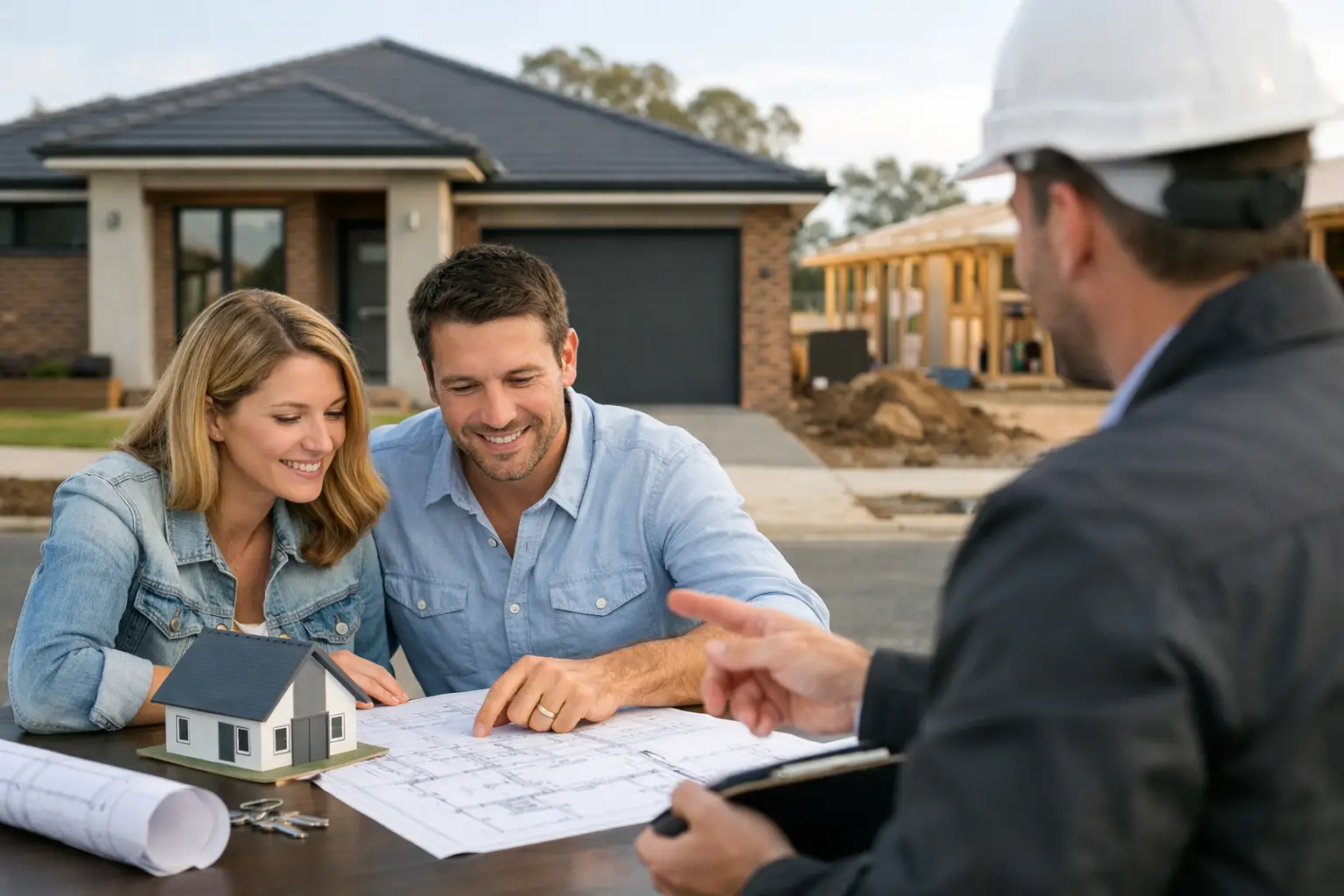
A new home, knockdown rebuild or dual occupancy project can look straightforward on a plan, then become expensive quickly when documentation is vague, site conditions are ignored or trades are poorly managed. When comparing Home Builders in Dallas, Victoria 3047, the real question is not who can make the biggest promise. It is who has the systems, trade standards and project discipline to deliver the home properly.
Dallas offers established residential streets, family connections and access to Melbourne’s north. It also means many projects involve existing homes, constrained blocks, planning considerations and ageing site infrastructure. A builder needs to assess the whole job before offering certainty on cost and timeframe.
What to look for in home builders in Dallas, Victoria 3047
Start with the scope. A quality builder should be able to explain what is included in the price, what has been allowed for, and what could change if new information arises. A fixed-price contract is valuable only when it is built on complete drawings, engineering, specifications and a considered understanding of the site.
Be careful with low initial figures supported by large provisional sums or broad exclusions. Soil conditions, demolition, drainage upgrades, service connections, cabinetry, appliances and external works can materially affect the final cost. There is nothing wrong with an allowance where a selection is genuinely undecided, but it should be clear, realistic and easy to track.
The builder should also be comfortable discussing permits and approvals early. Depending on the project, this may include planning requirements, building permits, energy-efficiency obligations, engineering and council considerations through Hume City Council. The right pathway depends on the block and the design. A builder who investigates this early helps prevent avoidable redesigns and delays later.
Build quality is decided before the paint goes on
Premium finishes matter, but they are not the measure of a durable home. The work behind the plaster, tiles and cladding carries far greater long-term consequence.
Ask how the builder manages waterproofing, structural bracing, flashing, framing tolerances, insulation, drainage and subfloor ventilation. These are not glamorous discussion points, yet they are where shortcuts can lead to moisture damage, movement, poor thermal performance and costly rectification.
A professionally managed build should include documented inspections at key stages. That means checking work before it is concealed, not relying on a final walk-through when defects are harder to identify and fix. Licensed, insured and appropriately qualified trades are equally essential, but credentials alone are not enough. Someone must coordinate their work, inspect it and hold every stage to the agreed standard.
Choose a builder that suits the project, not just the postcode
The best builder for a new custom home may not be the right fit for a major renovation. Renovations demand careful work around existing structures, concealed services and occupied living areas. Knockdown rebuilds require disciplined demolition coordination, site preparation and new-home delivery. Dual occupancy projects add another layer, with design efficiency, approvals, servicing and sequencing all affecting the outcome.
For larger or more complex work, an end-to-end approach can reduce handover gaps between designer, consultant, permit team and site crew. Builda Group manages this process from early planning through fixed-price contracting, construction, handover and post-handover support. The benefit is accountability: one experienced team understands the original intent, the approved documentation and the construction decisions made along the way.
That does not mean every homeowner needs a full design-and-construct service. If you already have detailed architectural drawings and consultant reports, you may need a builder with the capability to price and construct them accurately. What matters is that the builder tests the documentation rather than treating it as faultless. Good builders raise questions before signing, not after demolition begins.
Questions worth asking before you sign
A first meeting should give you more than a brochure and an indicative price. Ask who will manage the project day to day, how often you will receive updates, how variations are approved, and what inspections occur at each stage. You should understand the expected programme, the process for selecting finishes and the practical arrangements for site access, safety and neighbour communication.
Also ask what sits behind the warranty promise. A 10-year structural guarantee provides reassurance, but it should be supported by sound construction practice, compliant contracts and a builder prepared to stand behind their work. The strongest protection is not paperwork alone. It is a builder that gets the structure, moisture management and supervision right from the start.
A well-built home in Dallas should feel considered long after handover. Choose the team that can explain the unseen work with the same confidence as the finished kitchen, because that is where lasting quality begins.